
Quick answer: Teen drinking is riskier than adult drinking because the adolescent brain is still developing, so alcohol can reshape reward and self-control circuits and lead to dependence faster. The earlier a teen starts drinking, the higher the lifetime risk of alcohol use disorder, which is why early, non-judgmental conversations and support matter.
The teenage years are filled with discovery, growth, and sometimes, risky choices. When it comes to alcohol, what might seem like “just experimenting” can quickly become something more serious. As a doctor who’s worked with hundreds of young people living with alcohol problems, I’ve seen how underage drinking can set the stage for addiction in ways that many parents, teachers, and even teens themselves don’t realize.
New here? This article is one part of our complete parent’s guide to teenage substance abuse, which covers the warning signs, why teens are vulnerable, and exactly what to do next.
Here’s what’s really happening: the teenage brain responds differently to alcohol than an adult brain does. This difference isn’t just about maturity or experience; it’s about actual brain chemistry and development. Understanding this connection could be the key to protecting the young people in your life.
Why Teens and Alcohol Don’t Mix Well
The teenage brain is still developing in critical areas affected by alcohol
The Teenage Brain: Under Construction
Think of the teenage brain like wet cement. While adult brains are more like hardened concrete, teen brains are still setting. This means outside influences like alcohol leave a much deeper impression.
The brain doesn’t fully develop until around age 25. During the teen years, the brain is busy building important connections, especially in the prefrontal cortex. This is the part that handles decision-making, impulse control, and judgment. It’s also one of the last areas to mature.
Alcohol’s Special Impact on Teen Brains
When teens drink, alcohol affects their brains differently than adults in several important ways:
- Teens need to drink more to feel sedated, but experience more memory impairment than adults
- Alcohol disrupts the formation of new brain connections that are critical for healthy development
- The hippocampus (memory center) can be up to 10% smaller in teens who drink heavily
- Learning and memory are more severely compromised in teens than adults who drink
- Alcohol interferes with good judgment in a brain that already struggles with impulse control
Research from McLean Hospital shows that alcohol particularly affects the GABA system in the brain’s frontal lobe. This system is critical for cognitive control and decision-making exactly what teens need most when facing peer pressure and risky situations.
“By late adolescence, GABA receptors in the frontal lobe reach adult levels, a key milestone that supports stronger cognitive control, sound decision-making, and reduced impulsivity. Alcohol use during this critical phase can disrupt that maturation, potentially impairing long-term brain development and behavioral regulation.”
What Is Alcohol Use Disorder (AUD), Anyway?
Before we go further, let’s be clear about what we mean by Alcohol Use Disorder. It’s not just about drinking too much or too often—it’s a medical condition recognized by doctors and mental health professionals.
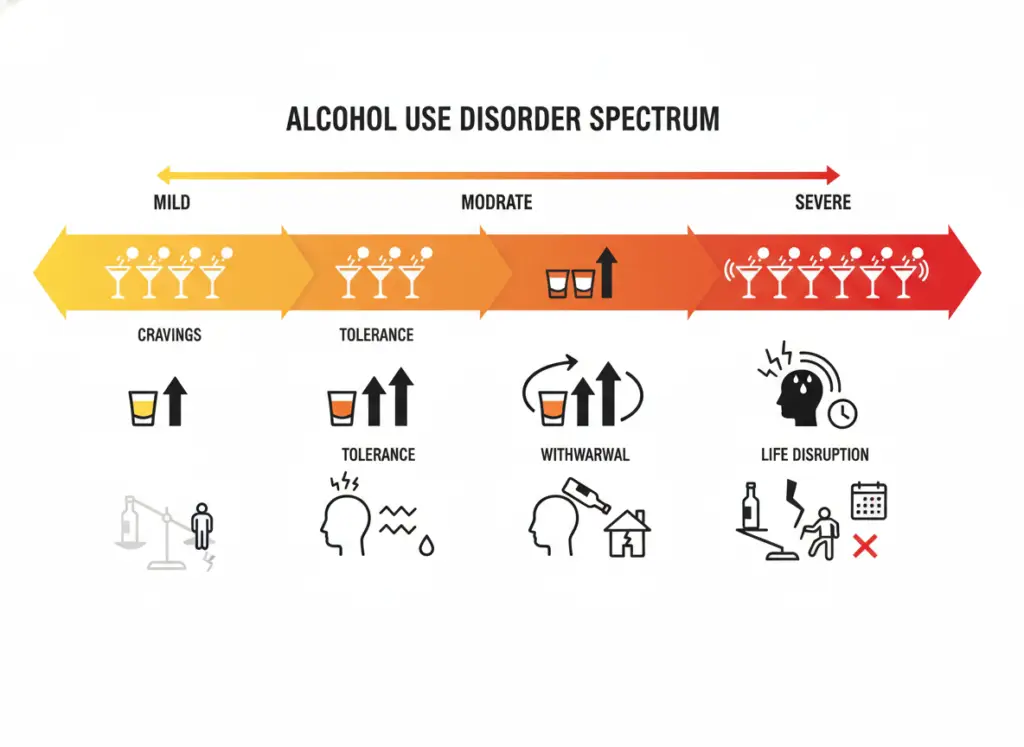
AUD exists on a spectrum from mild to severe
AUD is characterized by a pattern of alcohol use that involves problems controlling drinking, being preoccupied with alcohol, continuing to use alcohol even when it causes problems, having to drink more to get the same effect (tolerance), or having withdrawal symptoms when you rapidly decrease or stop drinking.
More Than Just “Drinking Too Much”
Someone with AUD might experience:
- Strong cravings or urges to drink
- Failed attempts to cut down or control drinking
- Spending a lot of time drinking or recovering from drinking
- Giving up important activities because of alcohol
- Continuing to drink despite the problems it causes
- Developing tolerance (needing more to feel the effects)
- Experiencing withdrawal symptoms when not drinking
- Drinking in dangerous situations (like driving)
What makes teen AUD particularly concerning is how quickly it can develop compared to adults. The adolescent brain’s heightened sensitivity to alcohol’s rewarding effects, combined with its underdeveloped impulse control system, creates a perfect storm for rapid development of addiction.
Important fact: People who begin drinking before age 15 are four times more likely to develop alcohol dependence at some point in their lives compared to those who start drinking at age 21 or older.
How Drinking Young Speeds Things Up
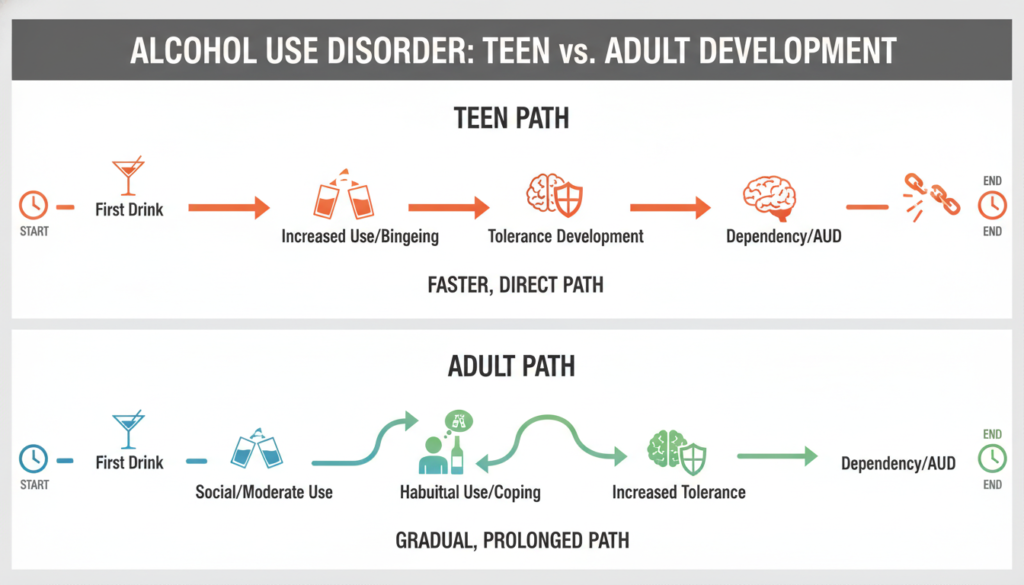
The path from first drink to alcohol dependency is often shorter for teens
Ever wonder why some teens seem to spiral into problematic drinking so much faster than adults? There are several key factors at play:
The Earlier the Start, the Higher the Risk
Research consistently shows that the age of first alcohol use strongly predicts future problems. According to the National Institute on Alcohol Abuse and Alcoholism, teens who start drinking before age 15 have a 41% chance of developing alcohol dependence during their lifetime. Wait until the legal drinking age of 21, and that risk drops to just 10%.
Teen Brains Are More Adaptable (For Better or Worse)
The teenage brain is incredibly adaptable. Neuroscientists call this “neuroplasticity.” This adaptability helps teens learn languages, master new skills, and recover from injuries faster than adults. But there’s a downside: the teen brain also adapts more quickly to substances like alcohol.
When teens drink, their brains rapidly form new neural pathways that associate alcohol with pleasure, stress relief, and social acceptance. These pathways become stronger with each drinking episode, making it increasingly difficult to resist the urge to drink.
Different Sensitivity to Alcohol’s Effects
Studies with both humans and animals reveal that adolescents experience alcohol differently from adults:
Less Sensitive to Negative Effects
- Teens feel less sedation and motor impairment
- Experience fewer hangover symptoms
- Less likely to feel the “stop signals” that help adults limit consumption
More Sensitive to Positive Effects
- Greater feelings of social facilitation
- Stronger stress-reduction effects
- More pronounced mood elevation
This combination is dangerous: teens get more of the “good feelings” from alcohol while experiencing fewer of the negative consequences that might otherwise discourage drinking.
Signs a Teen May Be Developing a Problem
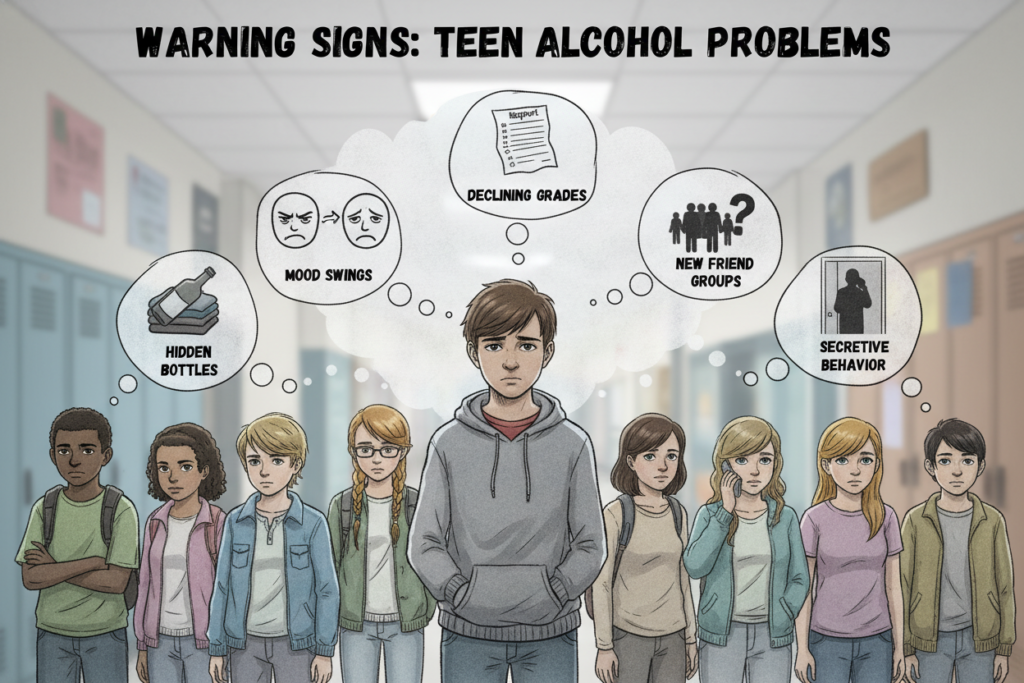
Recognizing the warning signs early can make a significant difference
Spotting the early signs of alcohol problems in teens can be challenging. Many of the warning signs overlap with typical teenage behavior changes. However, when these signs appear together or represent a significant change from a teen’s usual behavior, it’s time to pay attention.
Physical and Behavioral Signs
Physical Changes
- Smell of alcohol on breath or clothes
- Bloodshot eyes, pupils larger or smaller than usual
- Slurred speech or impaired coordination
- Unexplained injuries or frequent accidents
- Changes in appetite or sleep patterns
Behavioral Changes
- Skipping classes or declining grades
- Missing family functions or breaking curfew
- Losing interest in favorite activities
- Changing friend groups suddenly
- Increased secrecy about possessions or activities
Emotional Changes
- Mood swings, irritability, or defensive behavior
- Unusual hyperactivity, agitation, or giddiness
- Lack of motivation or appears lethargic
- Appears fearful, anxious, or paranoid without reason
- Depression or withdrawal from family and friends
Signs That Alcohol Use Is Progressing to AUD
As casual or experimental drinking progresses toward alcohol use disorder, you may notice:
- Tolerance: Needing more alcohol to get the same effect
- Withdrawal symptoms: Feeling anxious, irritable, or nauseous when not drinking
- Loss of control: Drinking more or for longer than intended
- Failed attempts to quit: Wanting to cut down but being unable to
- Time spent: Spending a lot of time obtaining alcohol, drinking, or recovering
- Neglected responsibilities: Missing school, work, or family obligations
- Continued use despite problems: Drinking despite physical or psychological problems
Warning: If you notice several of these signs, don’t wait to get help. Early intervention is crucial for preventing the progression of alcohol problems. The longer problematic drinking continues, the more difficult recovery becomes.
Talking to Teens About Alcohol (Without a Lecture)

Creating a safe space for open dialogue is essential
Starting conversations about alcohol doesn’t have to be awkward or confrontational. The most effective approach is ongoing, open dialogue rather than a one-time “big talk.” Here’s how to make these conversations more productive:
Create the Right Environment
Do:
- Choose a relaxed, private setting
- Talk when you’re both calm and have time
- Position yourself as a resource, not just an authority
- Use natural openings (news stories, TV shows, etc.)
Don’t:
- Initiate conversations when either of you is upset
- Talk in front of siblings or friends
- Start with accusations or assumptions
- Use scare tactics or exaggerations
Conversation Starters That Work
Instead of asking “Have you been drinking?” (which often leads to defensive responses), try these conversation openers:
“I read an article about how alcohol affects teen brains differently than adults. Did you know about that?”
“I noticed there was drinking at the party in that movie. What do you think about how they handled it?”
“I’m curious about what you and your friends think about drinking. What kinds of pressures do you guys face?”
Listen More Than You Talk
The most effective conversations happen when teens feel heard, not lectured. Try to:
- Ask open-ended questions that can’t be answered with just “yes” or “no”
- Validate their feelings even if you disagree with their perspective
- Resist the urge to interrupt or immediately correct misinformation
- Show genuine curiosity about their thoughts and experiences
- Share your own values and expectations clearly but respectfully
Focus on Facts, Not Fear
Teens respond better to accurate information than to scare tactics. Share age-appropriate facts about:
- How alcohol specifically affects developing brains
- The legal consequences of underage drinking
- The connection between early drinking and future alcohol problems
- Strategies for handling peer pressure and risky situations
Need Help Starting the Conversation?
Get free resources designed to help parents talk effectively with their teens about alcohol.
Help Is Out There And It Works

Professional support can make a significant difference in recovery outcomes
If you’re concerned about a teen’s drinking, remember that effective help is available. The earlier the intervention, the better the outcomes typically are. Many teens who receive appropriate treatment go on to live healthy, alcohol-free lives.
Types of Support Available
Assessment & Screening
- School counselors
- Primary care physicians
- Mental health professionals
- Online screening tools
Treatment Options
- Individual counseling
- Family therapy
- Group support programs
- Outpatient programs
- Residential treatment (for severe cases)
Support Resources
- School-based support groups
- Community youth programs
- Recovery high schools
- Parent support networks
What Makes Teen Treatment Different
Effective treatment for teens differs from adult programs in several important ways:
- Involves family members more extensively
- Addresses developmental needs specific to adolescents
- Includes academic support and peer relationship skills
- Recognizes co-occurring mental health issues common in teens
- Uses age-appropriate communication and engagement strategies
Success Stories Are Common
While we often hear about the worst outcomes, many teens successfully overcome early alcohol problems. Research shows that with appropriate intervention:
- Most teens who complete treatment show significant improvements
- Many achieve sustained recovery or significant reductions in drinking
- Academic performance typically improves
- Family relationships often strengthen
- Mental health symptoms frequently decrease
“Recovery isn’t just about stopping drinking, it’s about building a fulfilling life where alcohol doesn’t need to play a role. For teens especially, this means developing healthy coping skills, strong relationships, and a positive identity separate from substance use.”
Ready to Find Help?
Trained specialists are available 24/7 to provide information, support, and treatment referrals for families dealing with teen alcohol issues.
SAMHSA’s National Helpline – Free, Confidential, 24/7/365
If you’re concerned about your teen’s alcohol use, consider reaching out to Dr. Vaid. She is an Addiction Medicine Specialist and Certified Wellness Coach with the expertise to guide families through these challenging situations.
Taking the First Step Makes All the Difference

The journey to recovery begins with a single step forward
Understanding the connection between teen drinking and alcohol use disorder is the first step toward prevention and early intervention. The teenage brain’s unique vulnerability to alcohol makes early use particularly risky, but it also means that early intervention can be remarkably effective.
Whether you’re a parent worried about your child, a teacher concerned about a student, or a teen questioning your own relationship with alcohol, remember that knowledge is power. By recognizing the warning signs early and knowing where to turn for help, you can change the trajectory of a young life.
Most importantly, no one has to face these challenges alone. From professional treatment providers to support groups to online resources, help is available in many forms. The key is taking that first step—whether it’s starting a conversation, making a phone call, or reaching out to a trusted adult.
Remember: Early intervention doesn’t just prevent problems, it creates opportunities. By addressing alcohol issues early, teens have a better chance of developing healthy coping skills, building strong relationships, and achieving their full potential.