
Quick answer: Stage 6 of alcohol use disorder is chronic, severe dependence: alcohol now dominates a person's life, causing serious physical, mental, and social harm, and stopping without help can be medically dangerous. Recovery is still possible at this stage, but it usually requires medically supervised detox followed by ongoing treatment and support.
Chronic alcohol use disorder is the final and most severe stage of alcohol addiction. At this point, alcohol has become deeply woven into a person’s life. It causes serious physical, mental, and social harm. Even so, recovery is still possible with the right medical care and support. This guide explains what happens in the chronic stage and outlines pathways to healing.
What Is Chronic Alcohol Use Disorder?
Chronic alcohol use disorder (AUD) is the most severe form of alcohol addiction. It usually develops after years of problem drinking. The defining feature is a complete loss of control over alcohol use. Drinking continues despite devastating harm to health, relationships, and quality of life.
Chronic AUD is a medical condition, not a moral failing or character flaw. Years of heavy drinking change how the brain is built and how it works. These changes make it extremely hard to stop drinking without professional help.
Chronic alcohol use causes significant changes to the brain and liver, affecting both structure and function.
People with chronic AUD have typically experienced tolerance (needing more alcohol to achieve the same effect), physical dependence (experiencing withdrawal symptoms when not drinking), and have made multiple unsuccessful attempts to cut down or quit drinking.
How Does Stage 6 Develop?
Chronic alcohol use disorder does not appear suddenly. It builds gradually through earlier stages. Each stage brings worse symptoms and less control:
The shift to chronic AUD happens when drinking continues despite serious consequences. These can include health problems, broken relationships, job loss, money trouble, or legal issues. By this point, the brain’s reward system has changed in major ways.
Chronic AUD changes the brain in several ways. It damages the prefrontal cortex, which handles decision-making. It alters the reward pathway, which drives compulsive use. It also changes how the body responds to stress. These biological changes explain why willpower alone is rarely enough at this stage.
Physical Signs of Chronic Alcohol Use Disorder
Long-term heavy drinking takes a severe toll on the body. Alcohol is toxic to multiple organ systems. People with chronic AUD often show many physical symptoms as a result:
Neurological Effects
Many people with chronic AUD also heal slowly from wounds. They get frequent infections because their immune system is weakened. Vitamin deficiencies are common too, especially B vitamins like thiamine. These deficiencies can cause serious neurological problems.
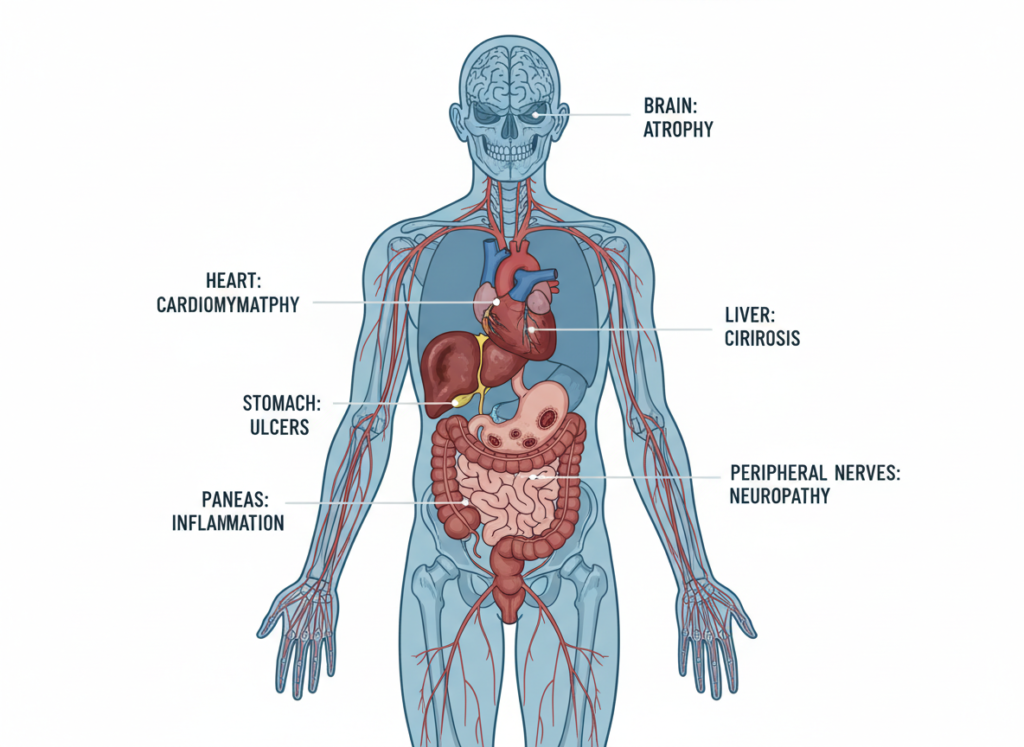
Chronic alcohol use disorder affects multiple body systems, causing widespread damage.
Mental and Emotional Symptoms
The psychological impact of chronic alcohol use disorder runs deep. Years of heavy drinking change brain chemistry and structure. This leads to a range of mental and emotional symptoms:
Severe Symptoms
Many people with chronic AUD feel emotionally flat or numb. They may seem detached from events and people around them, even those they once loved deeply. This numbness often feeds social isolation and relationship breakdown.
The link between alcohol use disorder and mental health is complex. Alcohol can briefly mask symptoms of depression or anxiety. Over time, it makes those conditions worse. This creates a dangerous cycle. A person drinks to ease emotional pain, but the drinking deepens that pain.
Mental Health Support Is Essential
If you or someone you care about has severe mental health symptoms along with chronic alcohol use disorder, professional help is crucial. Dual diagnosis treatment addresses both conditions at the same time.
Lifestyle and Social Impact
By the chronic stage, the effects of alcohol use disorder reach far beyond physical and mental health. The condition disrupts nearly every part of daily life:
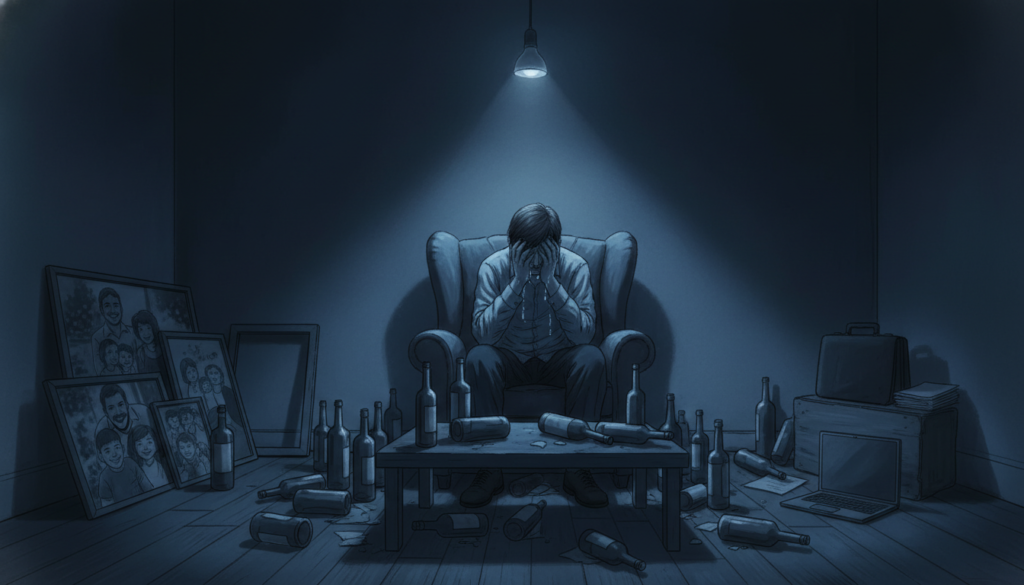
Chronic alcohol use disorder often leads to social isolation and breakdown of important relationships.
Daily Life Disruption
Shame and stigma often stop people with chronic AUD from seeking help. Many feel judged or misunderstood. So they hide their condition and avoid social situations. That isolation drives more drinking as a way to cope. It becomes a destructive cycle that is hard to break without help.
Complications of Late-Stage Alcohol Use
When to seek emergency care
Long-term heavy drinking can produce complications that are medical emergencies. These are the ones to know.
If any of these appear, call 911 or go to an emergency room. Do not wait to see whether it passes.
- Sudden, severe confusion
- Seeing or feeling things that are not there
- Body tremors, heavy sweating, fever
- Agitation, restlessness, rapid heartbeat
- Usually 48–96 hours after the last drink, sometimes up to 7–10 days
- Vomiting blood
- Black, tarry or bloody stools
- Lightheadedness or paleness
- MedlinePlus advises going to an emergency room immediately for either of the first two
- Confusion, forgetfulness, poor concentration
- Personality or mood changes
- Handwriting deteriorating, or loss of fine hand movements
- Shaking of the hands or arms
- A musty or sweet smell on the breath
- Nausea, vomiting, abdominal pain
- Deep, laboured, rapid breathing
- Agitation or confusion
- Reduced alertness, which can progress to coma
Never stop drinking abruptly on your own after long-term heavy use. Withdrawal can be dangerous and is one of the situations that leads to delirium tremens. Detox should be medically supervised.
Chronic alcohol use disorder can lead to severe, life-threatening complications. These require immediate medical attention. Knowing these risks helps you recognize when emergency care is needed:
Life-Threatening Complications
Warning signs of serious complications requiring immediate medical attention.
Chronic alcohol use also raises the risk of certain cancers. These include cancers of the mouth, throat, esophagus, liver, and breast. The risk grows with the amount of alcohol consumed over time.
People with chronic AUD also face a higher risk of traumatic injuries. Falls, car accidents, and other alcohol-related incidents are common. These injuries may heal slowly because alcohol weakens the immune system and overall health.
Call 911
If you or someone you know is experiencing severe withdrawal symptoms, confusion, vomiting blood, or seizures, call emergency services immediately.
Is Recovery Still Possible in Stage 6?
Despite the severity of chronic alcohol use disorder, recovery is absolutely possible. At this advanced stage, though, professional medical support is essential. Trying to quit on your own can be dangerous. Severe withdrawal symptoms can even be life-threatening.
A comprehensive treatment approach for chronic AUD typically includes:
Medical Detoxification
Supervised withdrawal management in a hospital or specialized facility with medications to prevent dangerous complications like delirium tremens.
Inpatient Rehabilitation
Intensive treatment in a residential setting, typically lasting 30-90 days, providing structure, therapy, and medical support.
Medication-Assisted Treatment
FDA-approved medications like naltrexone, acamprosate, or disulfiram to reduce cravings and support abstinence.
Psychiatric Care
Treatment for co-occurring mental health conditions like depression, anxiety, or PTSD that often accompany chronic AUD.
Ongoing Therapy
Individual and group counseling using evidence-based approaches like cognitive-behavioral therapy to address underlying issues.
Support Groups
Community-based support through programs like Alcoholics Anonymous, SMART Recovery, or other peer support networks.
Recovery from chronic AUD is usually a long-term process. Many people do best with a stepped approach to care. They move from intensive inpatient treatment to outpatient programs, then to ongoing support. Physical health often improves greatly with abstinence. Some conditions may still need ongoing medical care.
Take the First Step Toward Recovery
Professional treatment can help manage withdrawal safely and build a foundation for long-term recovery. It’s never too late to seek help.
How to Help Someone with Chronic AUD
Supporting a loved one with chronic alcohol use disorder takes patience, understanding, and balance. The goal is to encourage treatment without enabling. Enabling means actions that accidentally make continued drinking easier.
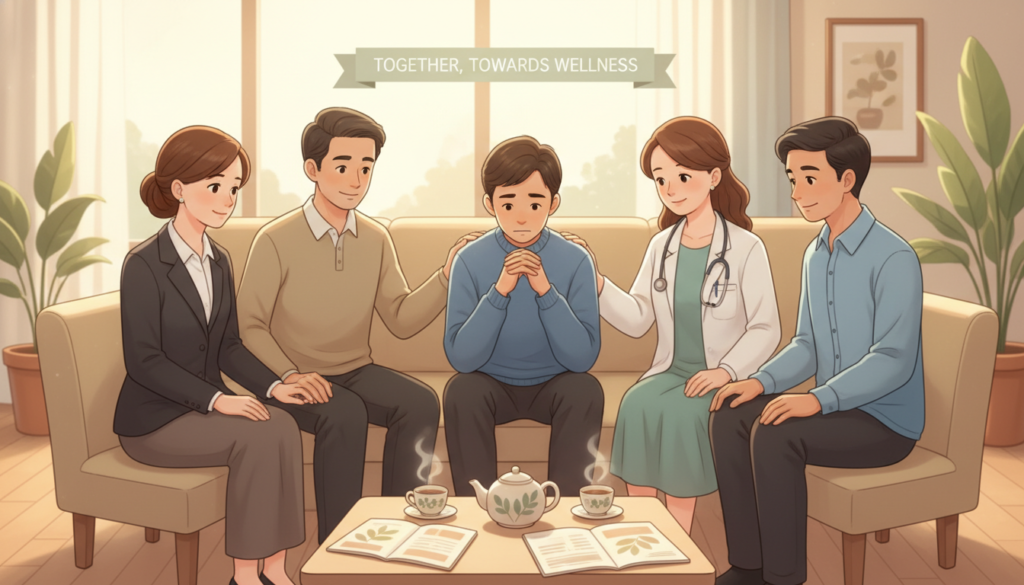
Supportive approaches are more effective than confrontation when helping someone with chronic AUD.
Effective Ways to Offer Support
Professional guidance can be invaluable here. Consider consulting an addiction specialist or interventionist. They can offer strategies tailored to your situation. The CRAFT approach (Community Reinforcement and Family Training) works especially well. It helps families motivate loved ones to enter treatment.
Remember:
You cannot force someone to get help or recover from alcohol use disorder. Recovery must ultimately be their decision. Your role is to offer support, provide information, and take care of your own wellbeing throughout the process.
Support for Family Members
Family members of people with alcohol use disorder need support too. Resources are available to help you navigate this challenging situation.
When to Seek Immediate Help
Certain symptoms associated with chronic alcohol use disorder require emergency medical attention. Being able to recognize these warning signs could save a life:
Seek Emergency Care Immediately If You Notice:
These symptoms may signal serious complications. Internal bleeding, delirium tremens, and organ failure are all possible. Never ignore them, even if similar symptoms went away on their own before.
Call 911
Do not attempt to transport someone experiencing severe symptoms yourself. Call emergency services and stay with them until help arrives.
For non-emergency situations where someone is ready to seek help for chronic alcohol use disorder, the Substance Abuse and Mental Health Services Administration (SAMHSA) offers a 24/7 helpline that can provide information about local treatment options.
1-800-662-HELP (4357)
SAMHSA’s National Helpline – Free, confidential, 24/7/365 treatment referral and information service.
Final Thoughts: A Medical Condition Deserving Compassion
Chronic alcohol use disorder is a complex medical condition. It has biological, psychological, and social components. It is not a moral failing or a sign of weakness. Like diabetes or heart disease, AUD needs proper medical treatment and ongoing management.
Recovery from chronic AUD is challenging but absolutely possible. Many people who lived with severe, long-term alcohol addiction have rebuilt their lives and health. The journey is rarely a straight line. Setbacks are common, but each step forward matters.
If you or someone you care about is struggling with chronic alcohol use disorder, please reach out for help. No one should face this condition alone, and with the right support, healing is possible even after years of heavy drinking.
Begin Your Recovery Journey Today
It’s never too late to seek help for alcohol use disorder. Treatment specialists are ready to guide you through the process of recovery.