Quick answer: The incubation stage is the silent first phase of an infection: the pathogen has entered your body and is multiplying, but you have no symptoms yet. It can last hours to months depending on the pathogen, and because you may already be contagious during this window, it is why infections spread before anyone feels sick.
The incubation period is how long it takes to develop symptoms after you are exposed to an infectious disease.
When germs enter your body, you do not get sick right away. The pathogen needs time to multiply before your immune system reacts and symptoms appear. This silent window is the incubation stage, and it explains why you can spread an illness before you even know you have it.
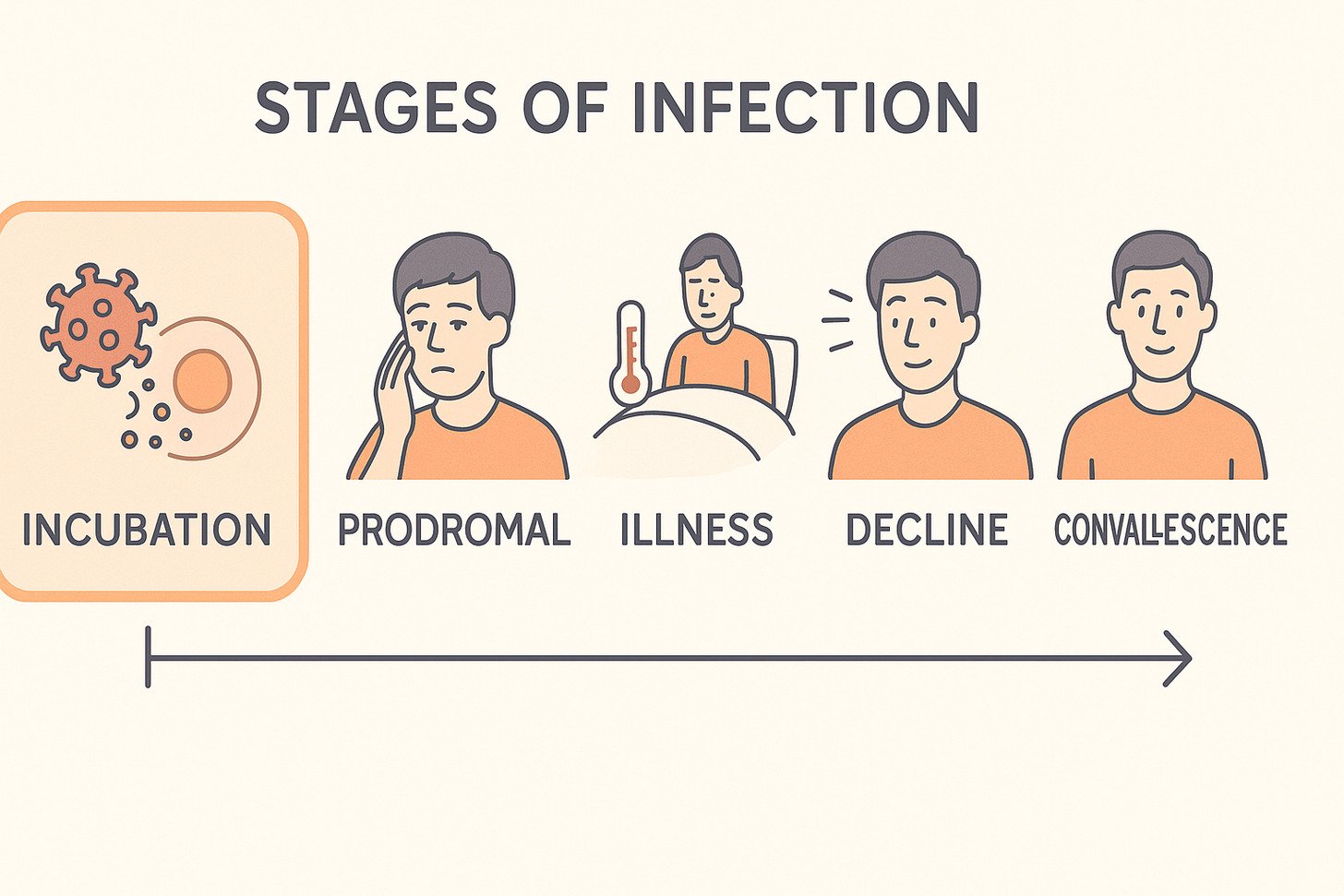
The five stages of infection, with incubation being the critical first phase
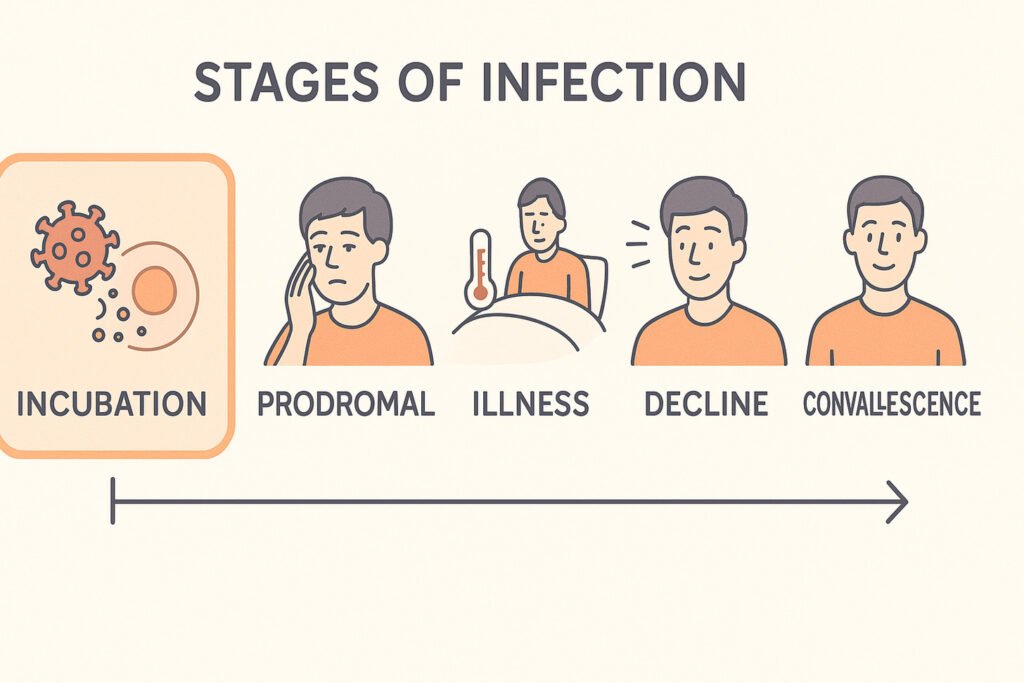
The 5 Stages of Infection
Every infection follows the same basic pattern:
- Incubation Stage: Pathogen enters and multiplies. No symptoms yet.
- Prodromal Stage: Vague, early symptoms appear (fatigue, mild fever).
- Illness Stage: Full symptoms develop. The infection is at its peak.
- Decline Stage: Symptoms start fading as your body gains control.
- Convalescence Stage: Recovery. Your body heals completely.
| Stage | Duration | Key Symptoms | Contagiousness |
| Incubation | Hours to months | None | Often contagious, especially late |
| Prodromal | Hours to days | Fatigue, mild fever, general discomfort | Usually highly contagious |
| Illness | Days to weeks | Full symptoms (fever, pain, specific signs) | Most contagious |
| Decline | Days to weeks | Gradually reducing | Decreasing |
| Convalescence | Days to months | Few to none, possible weakness | Usually not contagious |
The Incubation Stage Up Close
The incubation stage of infection is the gap between when a pathogen (virus, bacteria, fungus, or parasite) enters your body and when symptoms appear. You feel completely normal. But inside, the pathogen is multiplying.
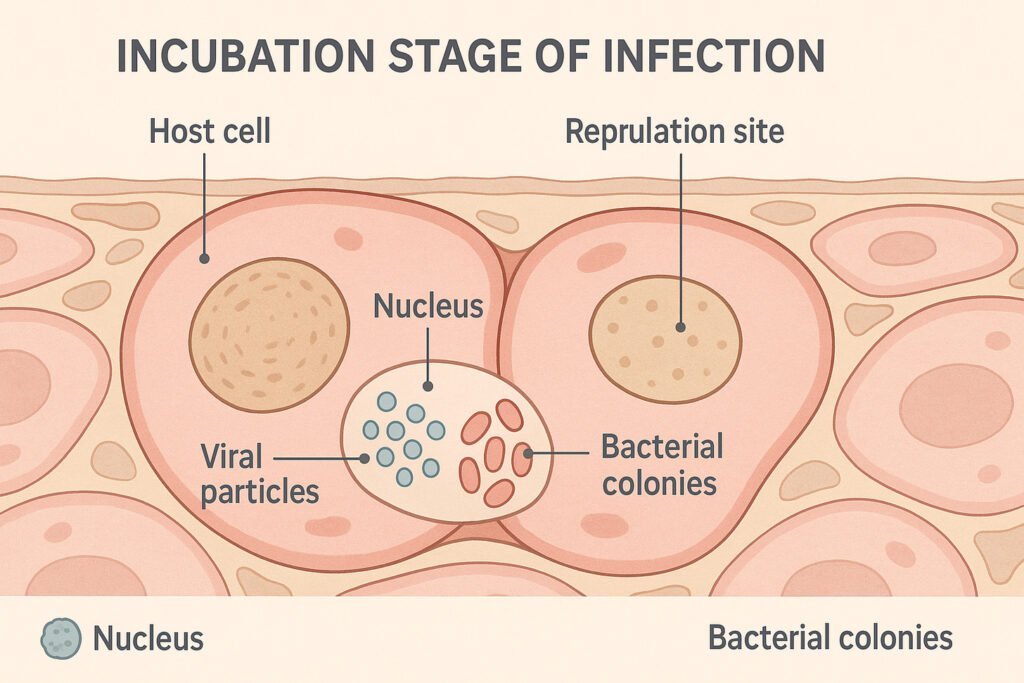
During incubation, pathogens multiply quietly before triggering symptoms
What Happens Inside Your Body
- The pathogen enters through the mouth, nose, eyes, or a break in the skin
- It attaches to your cells and starts reproducing
- The pathogen population grows fast
- Your immune system has not mounted a full response yet
- You feel fine, but you may already be contagious
Think of it as the pathogen’s stealth mode. It is building its numbers before your body catches on.
How Long Does Incubation Last?
It depends on the pathogen, how aggressive it is, and how much entered your body.
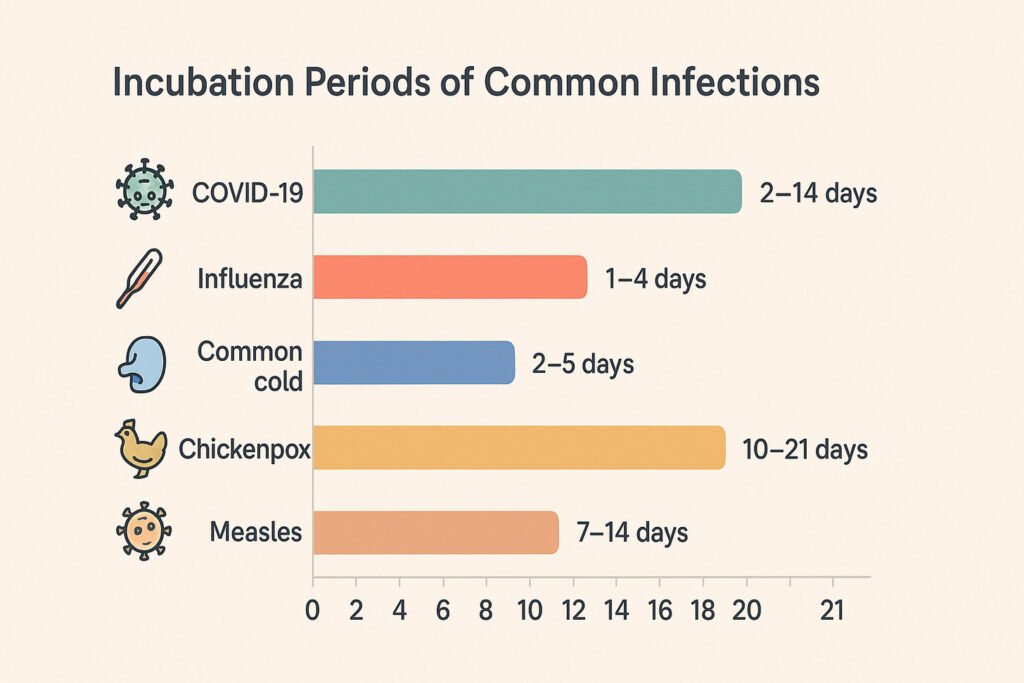
Comparison of incubation periods for common infections
Common Incubation Periods
- COVID-19: 2-14 days (average 5-6)
- Influenza (Flu): 1-4 days (average 2)
- Common Cold: 2-5 days
- Chickenpox: 10-21 days
- Strep Throat: 2-5 days
- Measles: 7-14 days
- Food Poisoning: 30 minutes to 8 days (varies by bacteria)
What Affects How Long Incubation Lasts
Pathogen Factors
- Type of pathogen: Viruses, bacteria, fungi, and parasites replicate at different speeds
- Aggressiveness: More virulent pathogens tend to have shorter incubation
- Dose: The more pathogen that enters, the shorter the wait
Your Body’s Factors
- Immune strength: A strong immune system may slow the pathogen down, extending incubation
- Age: Very young and elderly people often get sick faster
- Overall health: Chronic conditions can speed up symptom development
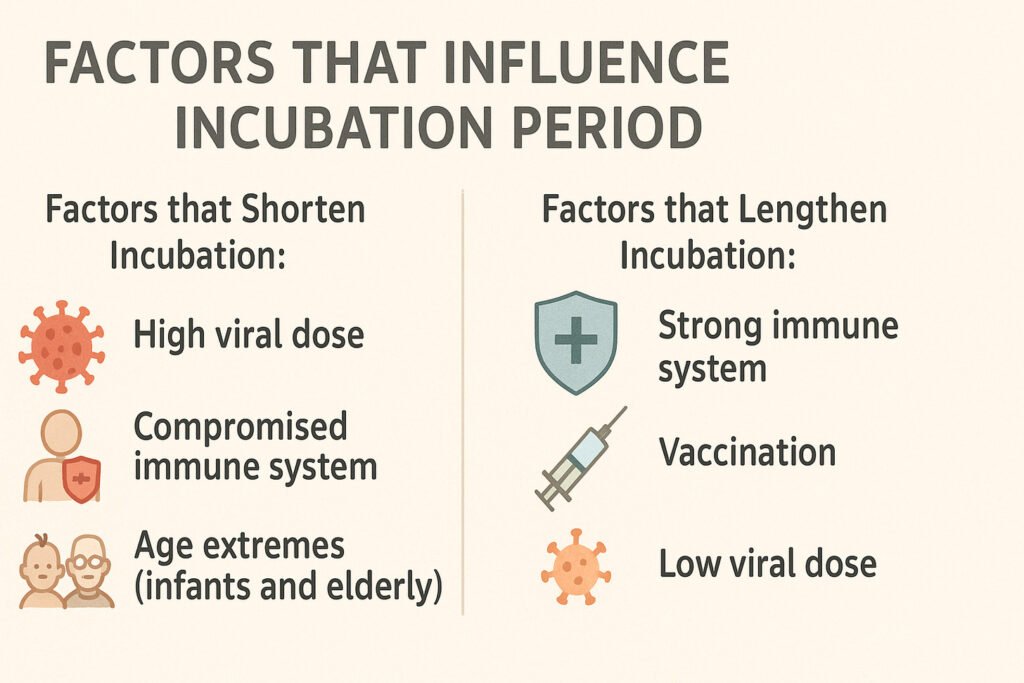
Factors that can lengthen or shorten the incubation period
Can You Spread Infection During Incubation?
Yes. This is one of the most important things about the incubation stage. You can spread the pathogen before you have any symptoms at all. This is exactly why diseases like COVID-19 spread so fast through communities.
Many infections are contagious during late incubation, even with zero symptoms. Quarantine periods are based on the maximum incubation time for this reason.
What Happens After Incubation
Prodromal Stage
The first vague signs that something is wrong. You might feel:
- Unusually tired
- Slightly feverish
- Generally unwell
- Headachy or achy
These symptoms are not specific to any one disease. They are your body’s first alarm. This stage is usually short before more distinctive symptoms develop.
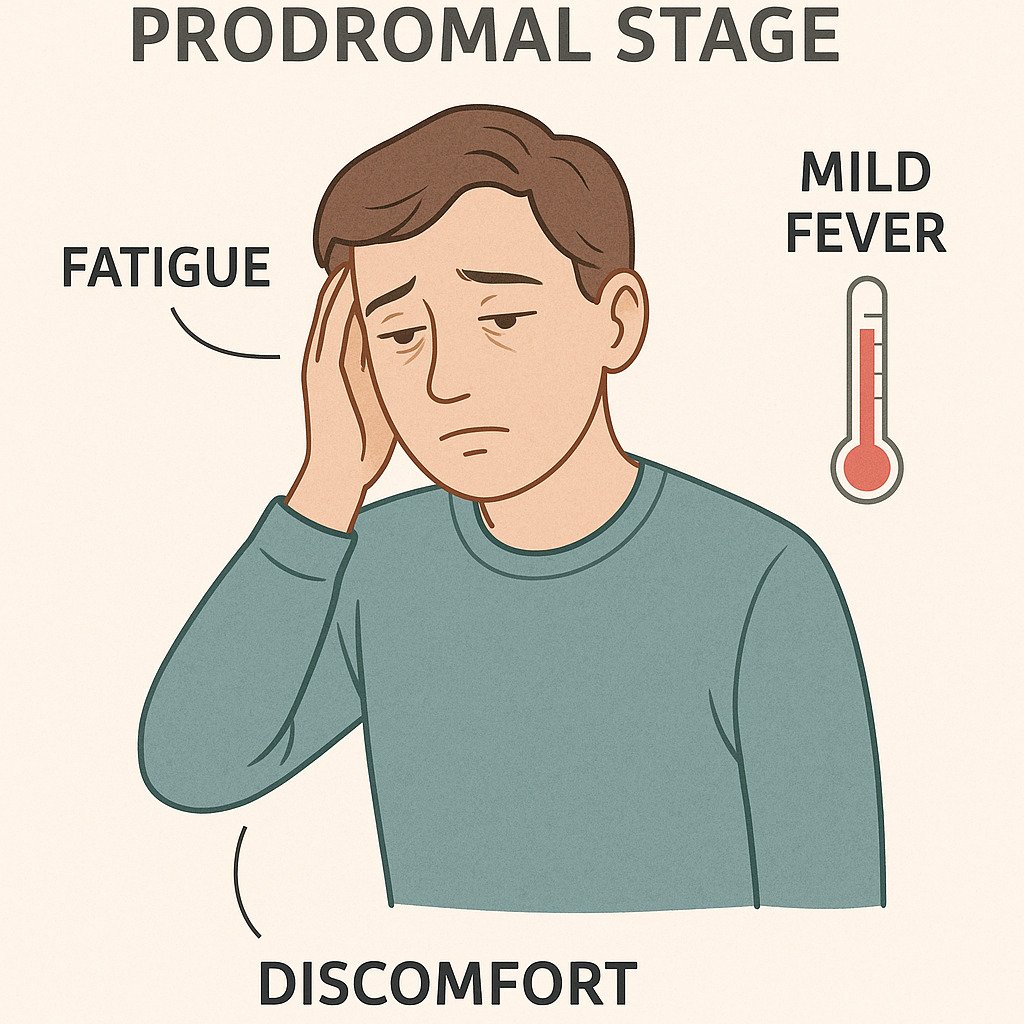
The prodromal stage brings the first subtle signs of illness
Illness Stage
The infection hits its peak. Symptoms become specific and often severe:
Respiratory Infections
- Coughing
- Sore throat
- Congestion
- High fever
Gastrointestinal Infections
- Nausea and vomiting
- Diarrhea
- Stomach cramps
- Dehydration
This is when you are typically most contagious, as your body sheds large amounts of the pathogen.
Decline Stage
Your immune system gains the upper hand. Symptoms ease. You are still sick but improving. The worst is over.
Convalescence Stage
The recovery phase. Symptoms are mostly gone, but you may feel weak or tired. Your body repairs damage and returns to normal function.
The complete progression through all five stages of infection
Why the Incubation Stage Matters
Knowing about incubation periods has real consequences for both personal and public health:
Disease Prevention
Incubation periods determine quarantine lengths, helping stop disease from spreading.
Contact Tracing
Knowing when someone was likely infectious helps identify others who may have been exposed.
Treatment Timing
Some treatments work best when started early, even before full symptoms develop.
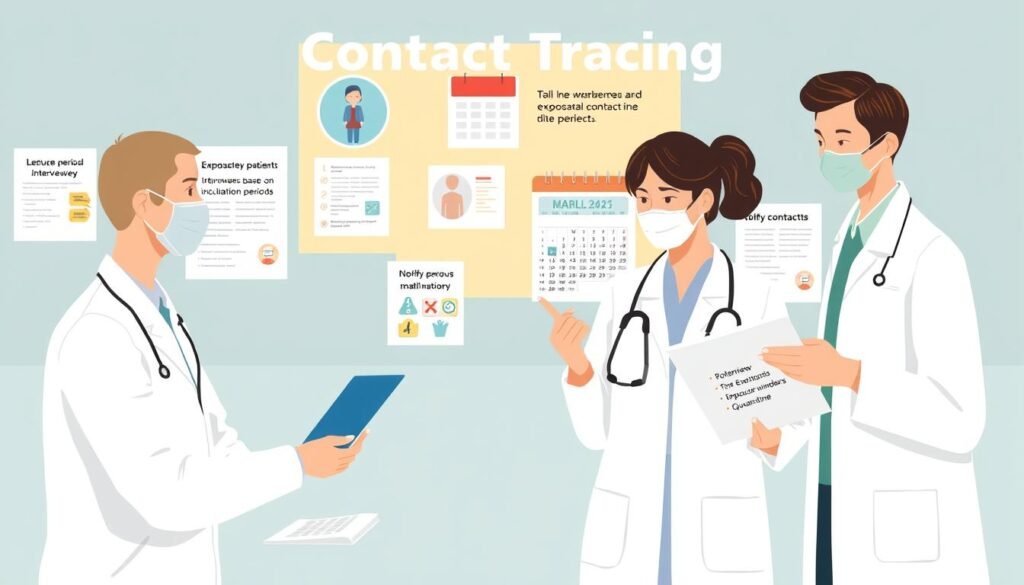
Contact tracing relies on understanding incubation periods
Protecting Yourself and Others
Since many infections spread during incubation, these habits matter every day:
- Wash your hands regularly
- Follow quarantine guidelines after known exposures
- Stay home when sick, even with mild symptoms
- Get vaccinated when vaccines are available
- Follow public health recommendations during outbreaks
The Bottom Line
The incubation stage of infection is just the beginning. By understanding all five stages, you can recognize what is happening when you get sick and take the right steps to protect yourself and others.
The biggest takeaway: many infections spread before symptoms appear. That makes preventive habits like handwashing, vaccination, and following public health guidelines your best defense, not just when you feel sick, but all the time.
Stay Informed About Infection Prevention
Read our complete guide to the stages of infection and learn how to protect your family.
Frequently Asked Questions About Incubation Periods
Can I spread a disease during the incubation period?
Yes. For many diseases, you are contagious before symptoms appear. This is especially true for respiratory infections like COVID-19 and the flu. It is why handwashing and masks matter during outbreaks, even if you feel fine.
When should I get tested after exposure?
It depends on the disease. For COVID-19, testing 5-7 days after exposure is usually recommended. For other infections, follow your doctor’s or health department’s guidance. Testing too early during incubation can give a false negative.
Does a longer incubation period mean a more serious disease?
Not necessarily. Some serious diseases have short incubation periods, others have long ones. Severity depends on the specific pathogen, your overall health, and your immune response, not on how long incubation takes.
Can vaccines change the incubation period?
Vaccines usually do not change the incubation period itself. But they can change how your body responds. Vaccinated people may have milder symptoms or none at all, even though the time to symptom onset stays about the same.
Reference: MedlinePlus — Infections (U.S. National Library of Medicine).
Medically reviewed by Dr. Meenu Vaid, MD — Board-certified in Internal Medicine, Infectious Disease, and Addiction Medicine. Last reviewed on June 27, 2026.
This is the first in our infection stages series. Next: Prodromal Stage: Early Warning Signs.
Reference: MedlinePlus — Infections (U.S. National Library of Medicine).
Medically reviewed by Dr. Meenu Vaid, MD, Board-Certified in Internal Medicine and Infectious Disease. Last clinically reviewed on August 2, 2026.
This article is for general educational purposes only and is not medical advice. Reading it does not create a doctor-patient relationship. For emergencies call 911. For crisis support call or text 988. Read our full medical disclaimer.