Quick answer: Stage 3 of alcohol use disorder is psychological dependence: alcohol becomes a mental crutch, with frequent thoughts about drinking and unease or anxiety when it is not available. Drinking is now driven by emotional need, not just habit, and this is often when people first realize something has to change.
Imagine someone who can’t stop thinking about alcohol, even when they are not drinking. Their thoughts return to planning the next drink or feeling anxious if alcohol is not available. This mental preoccupation is the core of psychological dependence on alcohol, a key stage in the progression of alcohol use disorder.
I have worked with many individuals at this pivotal stage. This article explains how psychological dependence feels, why it develops, and what steps can help you get support and begin recovery.
What Is Psychological Dependence on Alcohol?
Psychological dependence occurs when your mind feels it needs alcohol, even if your body shows no clear physical withdrawal. You may find yourself repeatedly thinking about drinking, planning future use, or relying on alcohol to cope with emotions.
Unlike physical dependence, which produces bodily withdrawal symptoms, psychological dependence reflects strong emotional and mental attachments to drinking. Over time, the brain links alcohol with reward or relief, creating powerful cravings that drive repeated alcohol use and increase the risk of alcohol use disorder.
This mental dependence often appears before physical dependence but can occur alongside it. See the “Why” section for how brain reward pathways help form these associations and why early recognition matters.
Common Signs of Psychological Dependence
- Persistent thoughts about alcohol and planning when to drink
- Using alcohol to feel normal or to cope with stress and anxiety
- Feeling restless, irritable, or anxious when alcohol is not available
- Relying on drinking as the main way to handle problems or socialize
- Hiding drinking or downplaying its effects to others
- Continuing to drink despite harmful consequences at work, home, or relationships
These signs can start subtly and become stronger over time. What feels like an occasional coping tool can shift into a patterned dependence that affects daily routines and decisions.
If several of these apply and you’re struggling to cut back, consider speaking with a healthcare provider or addiction medicine specialist for guidance.
Why Psychological Dependence Happens
Psychological dependence develops through predictable changes in the brain’s reward and learning systems, which helps explain why stopping can feel so difficult.
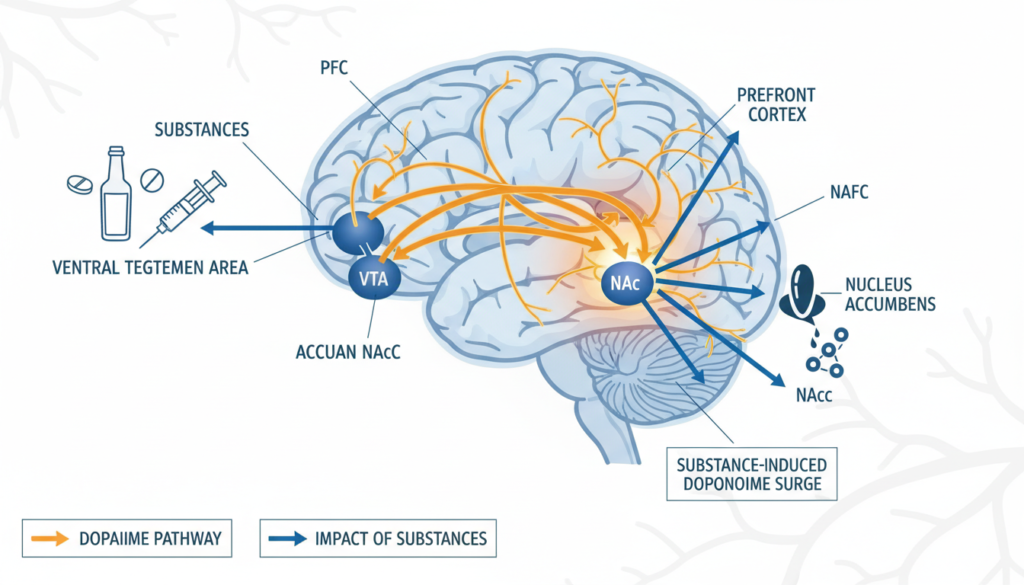
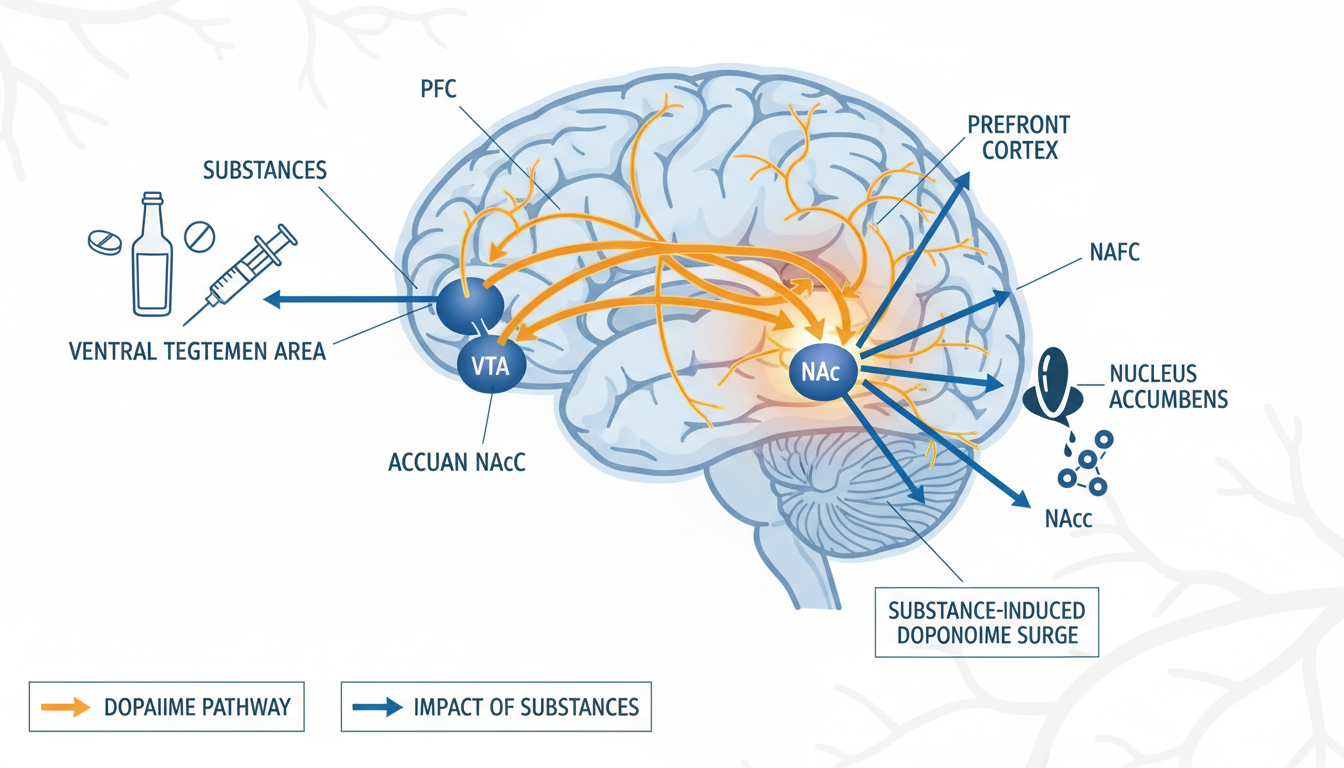
When you drink alcohol, the brain releases dopamine, a neurotransmitter tied to pleasure and reward. Repeated alcohol use strengthens neural circuits that link drinking with relief or positive feelings, making alcohol-related cues more likely to trigger cravings.
Over time these adapted neural pathways create a reward loop: stress or negative emotions spark cravings, drinking gives short-term relief, and the brain reinforces the connection. This process can occur long before physical withdrawal appears, though the two can co-occur.
Vulnerability varies by individual. Factors such as chronic stress, prior trauma, family history, and coexisting mental health issues increase the chance that alcohol use will evolve into psychological dependence.
The Mental and Emotional Struggles Behind the Cravings
Stress and Anxiety

Many people use alcohol to take the edge off after a stressful day because it can feel calming in the moment. Over time, however, alcohol can disrupt the brain’s stress-management systems, and regular use may increase baseline anxiety.
If stress is a trigger, try a short grounding exercise, a brisk walk, or a breathing practice and discuss structured coping strategies with a clinician.
Depression and Loneliness
Alcohol can temporarily numb emotional pain, which makes it a tempting way to cope with depression or loneliness. As a depressant, alcohol may deepen low mood over time, creating a cycle where drinking both follows and worsens emotional distress.
Reach out to a support group or mental health professional for targeted treatment for depression and to build healthier ways to connect.
Loss of Control
You may know alcohol is causing problems yet feel unable to stop. This is not a moral failing but a consequence of changes in brain circuits that regulate decision-making and impulse control.
If you feel trapped by urges or shame, contacting a healthcare provider or addiction medicine specialist can help you get a plan that combines therapy, peer support, and practical coping skills.
How Stage 3 Differs from Other Stages
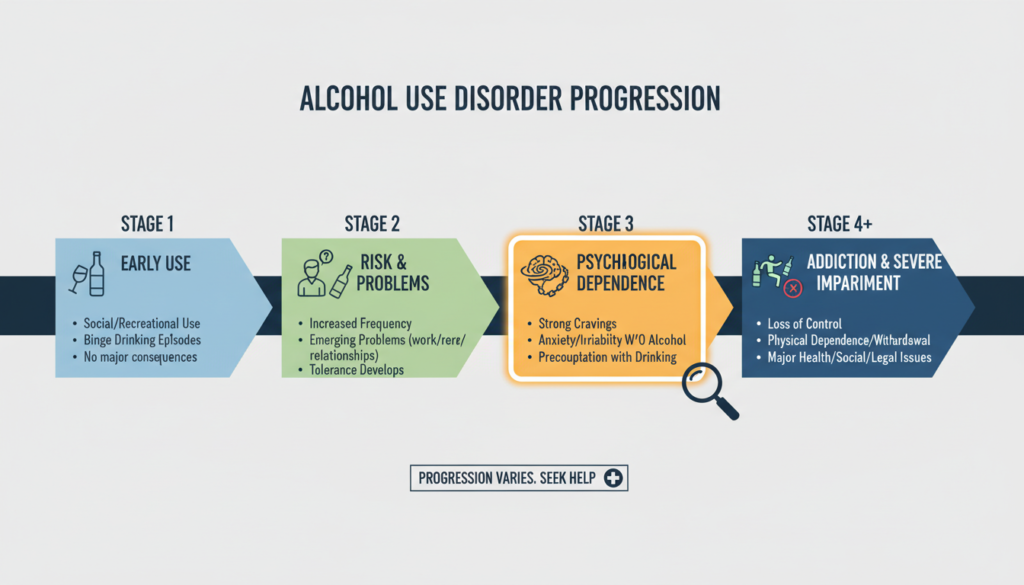
| Stage | Key Traits | Warning Signs | Intervention Difficulty |
| Stage 1: At-Risk Drinking | Occasional heavy drinking, few consequences | Drinking to fit in, occasional hangovers | Low – Education often helps |
| Stage 2: Early Problem Drinking | Tolerance builds, drinking becomes regular | Needing more alcohol for same effect, drinking alone | Moderate – May need counseling |
| Stage 3: Psychological Dependence | Mental obsession begins, emotional reliance on alcohol | Cravings, anxiety without alcohol, drinking despite consequences | High – Often needs structured support |
| Stage 4+: Physical Dependence | Physical withdrawal symptoms, daily drinking | Morning drinking, withdrawal symptoms, health problems | Very High – Medical supervision required |
Recognizing Stage 3 early can reduce the chance of progressing to physical dependence and dangerous withdrawal. If you notice persistent cravings, changes in mood, or increasing consequences from alcohol use, seek a medical evaluation or addiction medicine specialist for guidance.
How to Get Help in Stage 3

Talk to a Medical Professional
Start by seeing a healthcare provider or addiction medicine specialist who can evaluate your alcohol use, rule out other health issues, and recommend a treatment plan. They will assess severity and help connect you with appropriate care, from outpatient therapy to more intensive programs if needed.
Therapy Options
Cognitive Behavioral Therapy (CBT) helps you identify and change the thoughts and routines that lead to drinking and has strong evidence for treating psychological dependence.
Motivational Interviewing builds internal motivation to change and can help resolve ambivalence about cutting back or stopping alcohol use.
Group Support such as Alcoholics Anonymous, SMART Recovery, or other peer groups offers community, accountability, and practical strategies from people in recovery.
Lifestyle Support
- Track cravings and triggers in a journal to spot patterns
- Use stress-reduction activities like brief exercise, meditation, or paced breathing
- Build a recovery-focused support network and new routines that do not center on drinking
Stage 3 is serious, but it is a good time to seek help. The psychological patterns are established but often respond well to treatment before more severe physical complications arise.
When Psychological Dependence Turns Physical
Psychological and Physical Dependence
They overlap, and most people develop both — but they are not the same thing.
Without intervention, psychological dependence can progress to physical dependence when the body adapts to regular alcohol use and begins to need alcohol to function normally. That shift adds a new layer of risk and medical complexity to recovery.
Physical dependence brings withdrawal symptoms that range from mild to life-threatening. Common signs include tremors, sweating, nausea, and anxiety; severe cases can involve seizures or delirium tremens. Because withdrawal can be dangerous, medically supervised detox is often required to manage symptoms safely.
Progression to Stage 4 and beyond makes treatment more complex, which is why recognizing psychological signs early can prevent more serious alcohol dependence and health problems.
Important: If you have a long history of heavy drinking or experience withdrawal when you stop, seek medical help before attempting to quit on your own. If you or someone is showing severe withdrawal signs such as confusion, seizures, high fever, or loss of consciousness, call emergency services immediately.
Final Thoughts: Why Awareness Matters
Psychological dependence on alcohol often goes unnoticed because its signs are mental and emotional rather than physical. Unlike the visible symptoms of later-stage addiction, the mental pull of alcohol can be rationalized by the person using it and by those around them.
Recognizing these patterns is not about labeling someone but about identifying a treatable medical condition. The brain changes linked to psychological dependence are real and not a sign of weakness, and early recognition increases the chances of a successful recovery.
If you notice signs of psychological dependence in yourself or someone you care about, reach out for support. With appropriate treatment and support, people recover and rebuild healthier lives.
Can you have psychological dependence without physical dependence?
Yes. Psychological dependence often appears before physical dependence. Many people experience strong cravings and emotional reliance on alcohol for months or years before physical withdrawal develops, so early recognition matters.
How long does it take to overcome psychological dependence on alcohol?
Timelines vary widely based on drinking history, support, and coexisting mental health problems. Many people see meaningful improvement in weeks to months with a comprehensive plan that includes therapy and support, though some triggers can persist longer.
Can I treat psychological dependence on my own?
Self-help strategies can help, but psychological dependence often responds best to professional guidance. If you have tried to cut back without success, or if stopping causes severe withdrawal symptoms, contact a healthcare provider or addiction medicine specialist. Seek emergency care for seizures, confusion, high fever, or loss of consciousness.
Medically reviewed by Dr. Meenu Vaid, MD — Board-certified in Internal Medicine, Infectious Disease, and Addiction Medicine. Last reviewed on June 27, 2026.
This post is part of our 6 Stages of Alcohol Use Disorder series. Next: Stage 4: Physical Dependence.