Quick answer: A sobriety app is a phone app that tracks your days without alcohol or drugs, connects you to peer support, and gives you something to reach for in a difficult moment. Research on whether they reduce drinking is genuinely mixed. They work best alongside treatment, not instead of it.
Type “best sober app” into your phone and you will get a dozen listicles, all confident, most of them earning a commission on the download. What you rarely get is a straight answer about whether these things actually help.
So here is one. Some are useful. The research behind them is thinner than the marketing suggests, and how you use an app matters more than which one you pick.
Do sobriety apps actually work?
The honest answer is that it depends on the app, and the evidence pulls in both directions.
A randomised controlled trial published in 2024 followed 761 people for six months. Those using the full app cut their typical weekly drinking more than those given an education-only version, with an incidence rate ratio of 0.89. In plain terms, roughly an 11 percent greater reduction. Real, but modest. And on the secondary measures, heavy drinking days and alcohol-related problems, there was no significant difference at all.
Then there is the other side. A double-blind trial published in Addiction in 2025 gave 79 outpatients being treated for alcohol use disorder either a personalised training app or a sham version. At four weeks the two groups were indistinguishable, 75.5 drinks versus 71.3, with a p value of 0.86.
Both are recent. They disagree, and that disagreement is worth understanding before you download anything. Notice also what the positive trial actually compared: a full app against a stripped-down app, not an app against no app at all.
What this means for you: “There is an app for that” is not the same as “there is evidence for that.” A tested therapeutic programme and a habit tracker with a recovery theme are different products. Both can help. Only one has been measured.
What a sobriety app can and cannot do
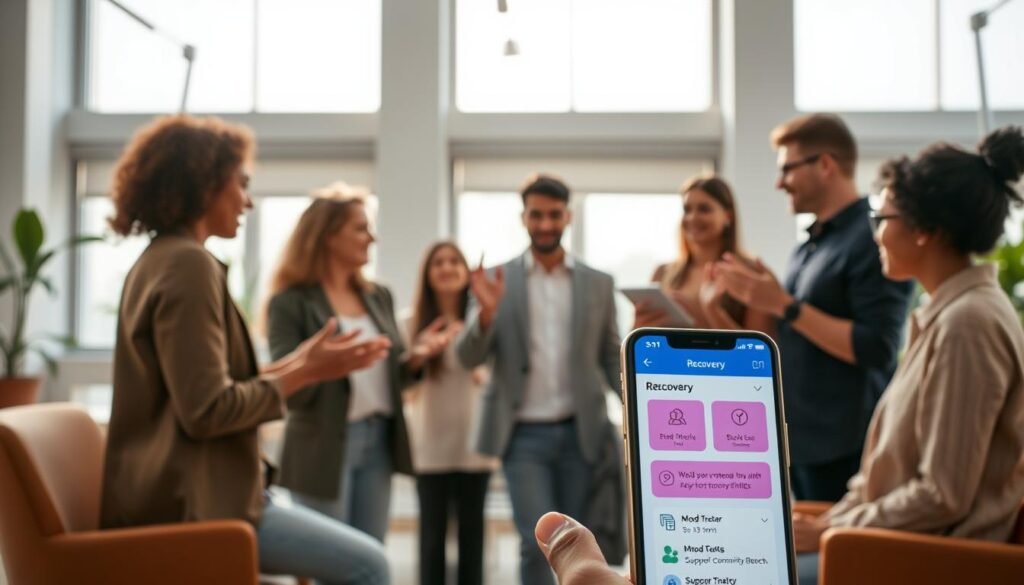
The apps that help tend to help in specific, unglamorous ways.
They are awake at three in the morning. Cravings do not keep business hours, and a meeting is not always available at the moment you need one. An app is.
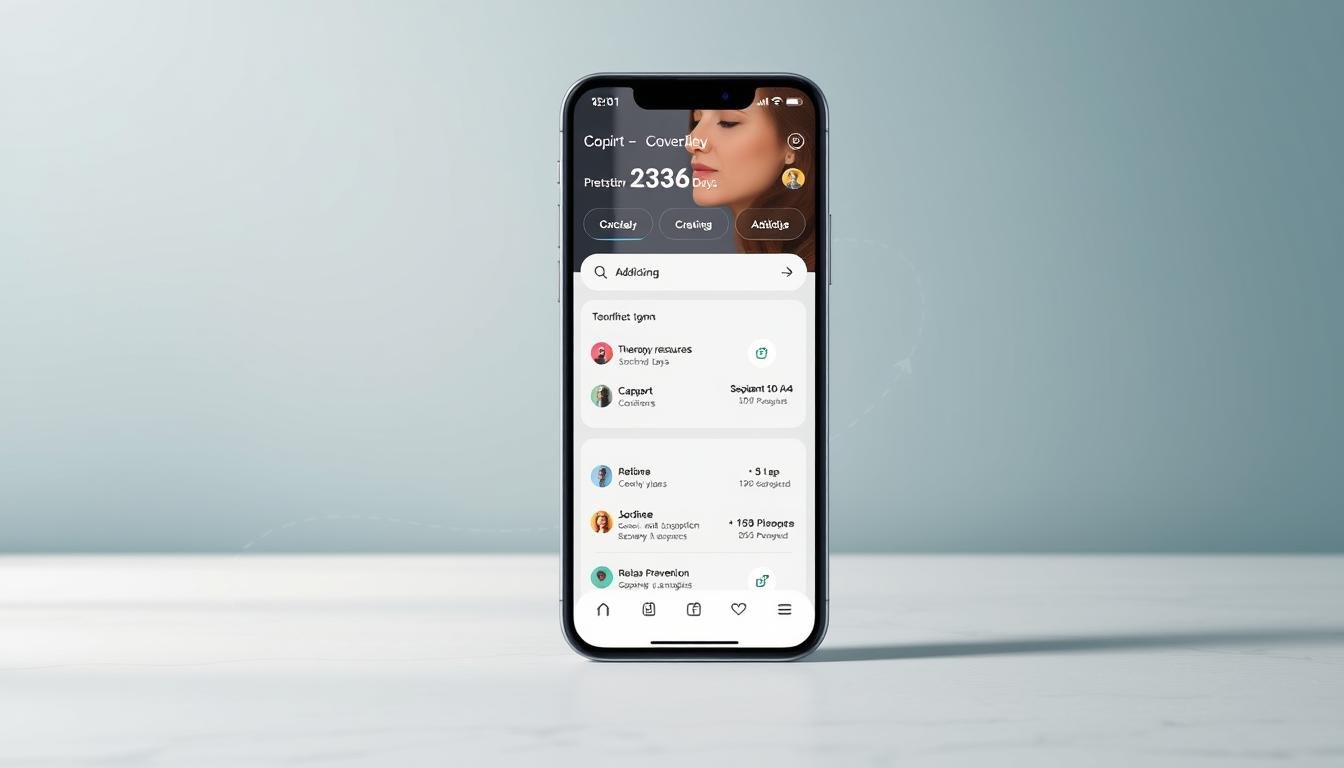
They make progress visible. Counting days sounds trivial until you have done ninety of them and can see it. For a lot of people that counter becomes a genuine reason not to start over. They also reduce isolation, which matters most early on and matters more if the people around you drink. And if you track cravings and triggers, you arrive at your next appointment with real data instead of a vague sense that last month was hard.
What they cannot do matters just as much. An app cannot manage withdrawal, and alcohol and benzodiazepine withdrawal can be dangerous without medical supervision. It cannot diagnose you. It cannot prescribe buprenorphine, naltrexone or acamprosate. It cannot sit with you through a crisis.
Where apps help and where they fall short
What apps do well
- Available at 3am, when cravings do not keep business hours
- Make progress visible and worth protecting
- Reduce isolation through peer contact
- Carry real data between appointments
- Cost little or nothing to try
What apps cannot replace
- Medical management of withdrawal
- Diagnosis of a substance use disorder
- Medication such as buprenorphine or naltrexone
- A clinician who knows your history
- Crisis care when you are unsafe
Sobriety apps are a supplement to treatment, not a substitute for it
There is one failure mode worth naming, because it catches people off guard. A day counter that motivates you on day forty can become a source of shame on the day it resets. If a relapse means losing a number you have been protecting, some people quietly stop opening the app rather than reset it, and that is the exact moment support matters most.
If that sounds like you, pick an app that lets you edit or restart a counter without ceremony. A return to use is information about what your recovery plan is missing. It is not a scoreboard.
The main kinds of sobriety apps
Most fall into one of four groups, and knowing which you need saves a lot of downloading.
| Type | What it does | Best for |
| Trackers | Counts sober days, milestones, money and calories not spent | Motivation and visible progress |
| Peer community | Forums, chat, virtual meetings, sober social events | Isolation, and hours when no meeting is running |
| Skills and coaching | Structured lessons, craving tools, therapist or coach access | Building coping skills between appointments |
| Prescription digital therapeutics | Clinician-prescribed programmes cleared by the FDA | Structured treatment under medical supervision |
Apps people are actually using
A few that remain active and are worth knowing about. None of these is an endorsement of a specific outcome, and I have no financial relationship with any of them.
- I Am Sober tracks days and pairs it with daily pledges and a community feed. Free with a paid tier.
- Nomo is free and built around clocks. You can run several at once, which suits people managing more than one thing.
- WEconnect offers free virtual peer support meetings through the day and routine-building reminders.
- Loosid leans social, with sober events, dating and travel alongside recovery content.
- SoberTool and rTribe focus on craving-moment tools and accountability.
A note on older recommendations. Sober Grid, which appeared on nearly every recovery app list for years, was withdrawn from the app stores in late 2023 and its services have since shut down. If you are reading an app roundup that still recommends it, that page has not been updated in some time, which is worth remembering about the rest of its advice too.
The apps your doctor can prescribe
One category sits apart from the rest. Prescription digital therapeutics are software programmes that have gone through the FDA’s review process and are prescribed by a clinician rather than downloaded on impulse.
reSET and reSET-O are the best known. reSET-O was cleared by the FDA in 2018 for opioid use disorder and delivers a twelve-week course of cognitive behavioural therapy with contingency management built in. Their history is instructive: the original developer, Pear Therapeutics, went bankrupt in 2023 and the programmes went dark until PursueCare acquired them and brought them back in August 2024.
Two things to take from that. Cleared is not approved, a real regulatory distinction that marketing pages tend to blur. And even FDA-reviewed tools vanish when the company behind them fails, which is a reason to anchor your recovery in a relationship with a clinician rather than in software.
How to choose one, and what to check first
Start with the gap you are trying to fill. If evenings alone are the hard part, you need a community feature, not a better counter. Downloading five apps usually means opening none of them by week three.
Then check the privacy policy, and check it properly. This is the step almost everyone skips.
Before you enter anything personal
- Read what the app does with your data. Recovery information is among the most sensitive there is.
- Understand that most consumer wellness apps are not covered by the federal protections that apply to your medical records. The rules that shield substance use treatment records generally apply to treatment programmes and covered health providers, not to an app you downloaded yourself.
- Check whether data is shared with advertisers, and whether you can delete your account and history.
- Consider what a username reveals. Many people in recovery use a handle that is not their real name.
Finally, be realistic. An app you open daily for a month beats a better app you abandon in a week.
When an app is not enough
Apps are a supplement. There are situations where you need a person, and recognising them early matters.
If you are physically dependent on alcohol or benzodiazepines, do not attempt to stop on your own with an app for company. Withdrawal from either can be medically dangerous and sometimes life threatening. That is a supervised process.
Get in touch with a clinician if you are drinking or using to avoid withdrawal symptoms, if you have tried to stop and could not, if your use is affecting your health, work or relationships, or if you are managing depression or anxiety alongside it. Medication for alcohol and opioid use disorder is effective and underused, and no app can give it to you.
If you are in crisis or thinking about harming yourself, call or text 988 for the Suicide and Crisis Lifeline. For treatment referrals at any hour, SAMHSA’s free national helpline is 1-800-662-HELP (4357).
Talk to a physician about your recovery plan
Dr. Meenu Vaid is board certified in Addiction Medicine and sees patients in Morgan Hill and by telehealth across California. If an app has taken you as far as it can, that is a good reason to talk to someone.
Frequently asked questions
Do sobriety apps really work?
What is the best sober app?
Are sobriety apps free?
Can an app replace addiction treatment?
Are sobriety apps private?
Medically reviewed by Dr. Meenu Vaid, MD, Board-Certified in Internal Medicine, Infectious Disease, and Addiction Medicine. Last clinically reviewed on August 1, 2026.
This article is for general educational purposes only and is not medical advice. Reading it does not create a doctor-patient relationship. For emergencies call 911. For crisis support call or text 988.