
Quick answer: Stage 4 of alcohol use disorder is physical dependence: the body has adapted so completely that stopping brings withdrawal symptoms like shaking, sweating, and anxiety. Drinking is now partly to avoid feeling sick. Because alcohol withdrawal can be dangerous, quitting at this stage should be done with medical support.
Stage 4 Alcohol Use Disorder is the most advanced phase of alcohol addiction. It involves complete physical dependence. At this stage, the body relies so heavily on alcohol that drinking stops being about pleasure. Instead, it becomes about avoiding painful withdrawal symptoms. People at this level need alcohol just to get through the day, even as their health declines. Recognizing this condition early is key to getting the right professional help.
Understanding Physical Dependence in Alcohol Use Disorder
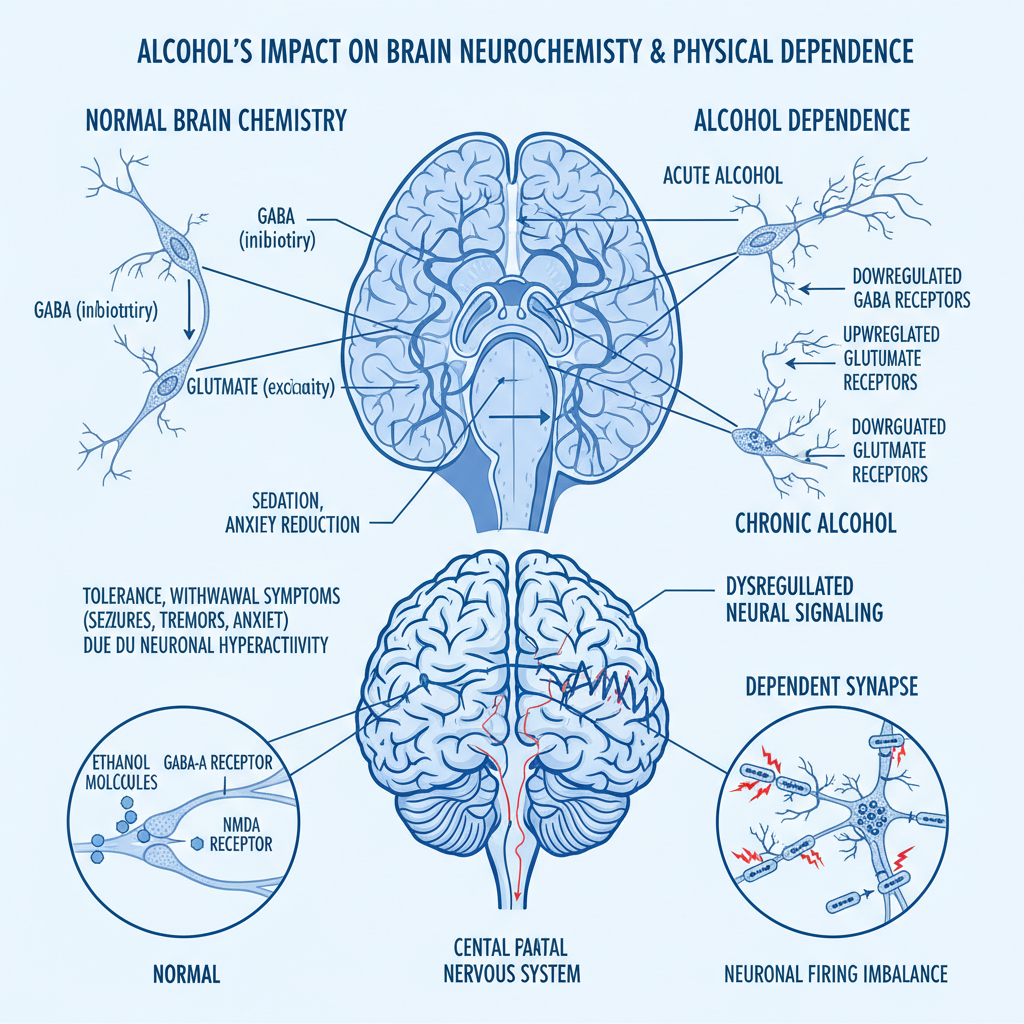
Physical dependence develops when your body adapts to having alcohol in your system all the time. After long periods of heavy drinking, your brain chemistry and nervous system change. They adjust to offset alcohol’s sedating effects. When alcohol levels drop, your body struggles to stay in balance. This triggers withdrawal symptoms that range from uncomfortable to life-threatening.
In Stage 4, this dependence becomes severe. Drinking shifts from a social activity or coping tool to a biological need. The person drinks not to feel good, but to avoid feeling terrible. This shift shows how deeply the body’s relationship with alcohol has changed. The physical need creates a cycle that is very hard to break without medical help.
Recognizing Physical Dependence
- Experiencing tremors, sweating, or nausea upon waking that improve after drinking
- Structuring daily activities around drinking schedules
- Feeling overwhelming anxiety or panic when alcohol isn’t available
- Consuming alcohol primarily to alleviate physical discomfort
- Finding it impossible to reduce consumption despite sincere attempts
The Progression to Stage 4 Alcohol Use Disorder
Stage 4 Alcohol Use Disorder usually develops slowly over months or years. What starts as occasional social drinking can gradually become a physical need. This happens through a series of worsening stages. Understanding how this progression works can help you spot warning signs early.
How Alcohol Use Disorder Progresses
A common way of describing the pattern. It is not a formal diagnosis — clinicians use DSM-5 criteria, which grade severity as mild, moderate or severe.
use
- Occasional and voluntary
- Usually social settings
- Curiosity or pleasure seeking
- No established pattern yet
use
- Increasing frequency
- Alcohol tied to particular activities
- Tolerance developing
- Blackouts may begin
use
- Frequent heavy drinking
- Control becoming harder
- Responsibilities slipping
- Physical or mental health declining
dependence
- Compulsive seeking
- Withdrawal without alcohol
- Near-constant intoxication
- Organ damage and loss of control
Stage 1: Occasional Use
Drinking primarily in social settings with some episodes of excess. May notice increased tolerance but maintains control over consumption and experiences few negative consequences.
Stage 2: Problematic Use
Drinking becomes more frequent and serves as a stress reliever. May experience occasional blackouts, hangovers that interfere with responsibilities, and growing preoccupation with alcohol.
Stage 3: Severe Alcohol Use
Drinking despite clear negative consequences. Experiencing mild withdrawal symptoms between drinking sessions. Neglecting important responsibilities and relationships due to alcohol use.
The Myth of "High-Functioning Alcoholism"
Many people with Stage 4 Alcohol Use Disorder keep up an appearance of normalcy. They continue working and meeting basic responsibilities despite severe dependence. This “high-functioning” phase often delays getting help. Both the person and their loved ones may think the situation is not that serious. But this stability is fragile. It usually breaks down as dependence deepens and health problems build up.
The Serious Dangers of Stage 4 Alcohol Use Disorder
Stage 4 Alcohol Use Disorder is a genuine medical emergency that needs immediate professional attention. The dangers go far beyond withdrawal discomfort. They include potentially fatal complications that affect multiple body systems.
Physical Health Complications
- Advanced liver disease (cirrhosis, alcoholic hepatitis)
- Neurological damage and cognitive impairment
- Heart problems including cardiomyopathy
- Compromised immune function
- Elevated risk of multiple cancers
- Chronic malnutrition and vitamin deficiencies
Mental Health & Social Impact
- Treatment-resistant depression and anxiety
- Increased suicidal ideation
- Deterioration of important relationships
- Employment instability and financial crisis
- Potential legal consequences
- Progressive social isolation
Concerned About Alcohol Dependence?
If you recognize these signs in yourself or someone you care about, professional help is essential. Our compassionate specialists can provide a confidential assessment and discuss personalized treatment options.
Identifying Stage 4 Alcohol Use Disorder: Key Signs and Symptoms
Recognizing the signs of Stage 4 Alcohol Use Disorder is crucial for getting help in time. These symptoms show up in physical, emotional, and behavioral ways. Together, they form a clear pattern of severe dependence that calls for professional treatment.
Physical Indicators
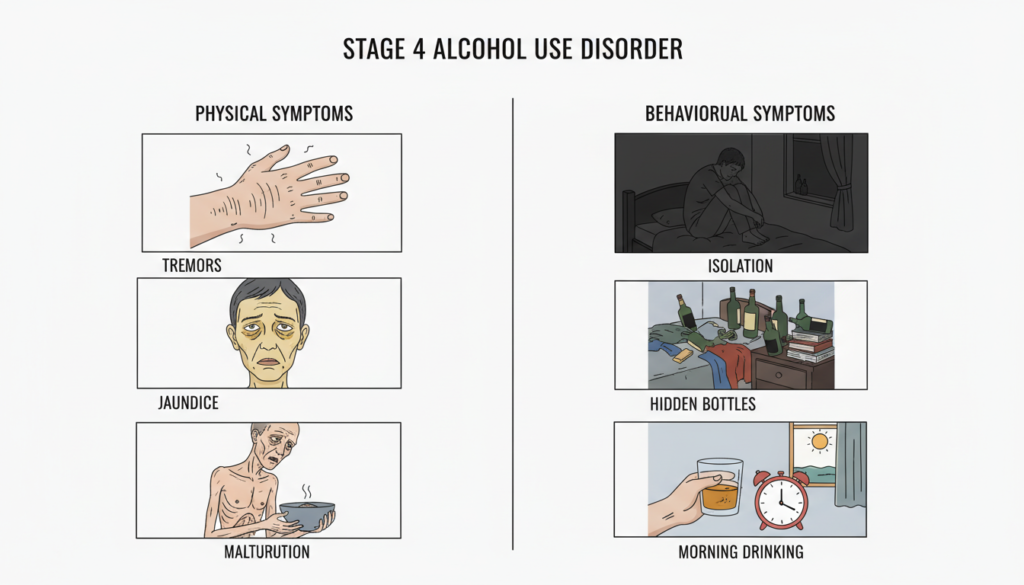
- Pronounced hand tremors, particularly in the morning
- Chronic digestive distress including nausea and vomiting
- Significant weight loss and nutritional deficiencies
- Yellowing of skin and eyes (jaundice) indicating liver damage
- Frequent infections due to compromised immunity
- Unsteady gait and impaired coordination
- Visible changes in skin condition and complexion
Behavioral and Emotional Signs
- Extreme irritability or agitation when unable to drink
- Strategic placement of alcohol throughout home and workplace
- Morning drinking to stabilize physical symptoms
- Continued drinking despite serious health, relationship, or legal consequences
- Progressive withdrawal from family activities and social connections
- Abandonment of previously enjoyed hobbies and interests
- Organizing daily schedule entirely around drinking opportunities
Alcohol Withdrawal in Stage 4: Life-Threatening Complications
When someone with Stage 4 Alcohol Use Disorder stops drinking suddenly, they face withdrawal symptoms that can be fatal. The body has adapted to alcohol being present all the time. When alcohol is removed, the reaction can be severe. That is why medical supervision during detox is absolutely essential.
CRITICAL WARNING: Never attempt unsupervised withdrawal if you or someone you know has Stage 4 Alcohol Use Disorder. Severe alcohol withdrawal can be fatal without proper medical management. Always seek professional medical help for safe detoxification.
Withdrawal Progression and Symptom Timeline
| Time Period | Early Symptoms | Advanced Symptoms |
| 6-12 hours after last drink | Anxiety, sweating, nausea, insomnia | Elevated heart rate, increased blood pressure |
| 12-24 hours | Confusion, pronounced tremors, sensory disturbances | Initial seizure risk begins |
| 24-48 hours | Intensification of previous symptoms | Visual or auditory hallucinations, disorientation |
| 48-72 hours | Peak intensity of general symptoms | Delirium tremens onset, severe confusion, hyperthermia, seizures |
| 72+ hours | Gradual symptom improvement | Continued delirium tremens, cardiovascular complications |
Understanding Delirium Tremens (DTs)
Delirium tremens (DTs) is the most dangerous form of alcohol withdrawal. It affects about 5% of people going through withdrawal. Even with proper medical care, it carries a 1-4% death rate. Symptoms include severe confusion, agitation, fever, seizures, and vivid hallucinations. DTs are a medical emergency that requires immediate hospitalization and intensive care.

Effective Treatment Approaches for Stage 4 Alcohol Use Disorder
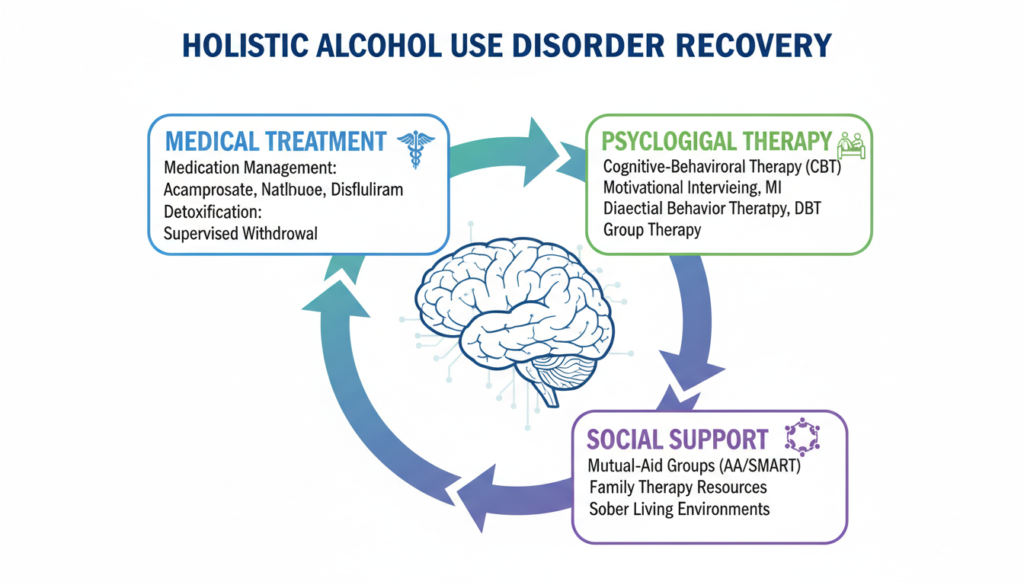
Recovery from Stage 4 Alcohol Use Disorder is possible with the right evidence-based treatment. The process usually starts with medically supervised detox. From there, it moves into structured rehab programs and ongoing support to maintain long-term sobriety.
Medically Supervised Detoxification
Professional withdrawal management with medications to prevent complications and manage symptoms. Typically conducted in a hospital or specialized facility over 5-10 days with 24-hour medical monitoring.

Comprehensive Rehabilitation
Structured inpatient or intensive outpatient programs providing therapy, education, and skill development. Programs typically last 30-90 days depending on individual needs and recovery progress.

Continuous Recovery Support
Ongoing care through support groups, individual therapy, and sometimes medications to prevent relapse and build a sustainable sober lifestyle for the long term.

FDA-Approved Medications for Alcohol Use Disorder
Several evidence-based medications can significantly improve recovery outcomes when used as part of a comprehensive treatment plan:
- Acamprosate (Campral) – Helps restore brain chemistry balance and reduces persistent withdrawal symptoms
- Naltrexone (Oral or Vivitrol) – Blocks alcohol’s pleasurable effects and reduces cravings
- Disulfiram (Antabuse) – Creates unpleasant physical reactions if alcohol is consumed, serving as a deterrent
These medications work best when combined with behavioral therapies and support systems. An addiction medicine specialist can determine which medication options best fit each person’s recovery needs.
Approaching Someone with Stage 4 Alcohol Use Disorder
Starting a conversation with someone who has severe alcohol dependence takes sensitivity, preparation, and good timing. Your goal should be to express genuine concern without judgment while encouraging them to seek professional help.
Constructive Conversation Strategies
- Select a time when the person is not intoxicated and relatively receptive
- Frame concerns using “I” statements: “I’ve noticed…” or “I’m worried about…”
- Reference specific behaviors rather than making character judgments
- Emphasize your concern for their health and wellbeing
- Have treatment information readily available
- Offer practical assistance with making appointments or transportation
- Prepare yourself for potential denial, anger, or minimization
Approaches to Avoid
- Accusatory language or confrontational tone
- Attempting serious conversations when the person is drinking
- Making threats or ultimatums you aren’t prepared to enforce
- Behaviors that inadvertently enable continued drinking
- Taking personal responsibility for their recovery process

The Path Forward: Recovery Is Possible
Stage 4 Alcohol Use Disorder (Physical Dependence) is a serious medical condition. But with the right treatment and support, recovery is possible. The journey starts with acknowledging the problem and seeking professional help. Many people who have faced severe alcohol dependence have gone on to rebuild healthy, fulfilling lives.
Remember that addiction is a chronic health condition that requires medical treatment. It is not a character flaw or moral failing. Treatment has advanced significantly in recent years. Even the most severe cases of alcohol dependence can see improved outcomes. With the right support and comprehensive care, healing is within reach.
Take the First Step Toward Recovery Today
Our experienced specialists are ready to help you or your loved one find the right treatment options for Stage 4 Alcohol Use Disorder. All consultations are completely confidential and compassionate.