
Quick answer: You can stop digital distraction by making focus the easy choice: silence notifications, keep your phone out of reach while studying or working, use short timed focus sessions, and set specific times to check apps. Redirecting your attention is a learnable skill, and these small changes retrain your brain to stay on task.
Your phone buzzes during class. A notification pops up while you study. Another app wants your attention right now. Sound familiar?
You’re not alone. Teens receive a median of 237 phone notifications every day, about a quarter of them during school hours, according to research by Common Sense Media. This guide gives you practical, evidence-based tools to take back control.
Why Do Digital Distractions Control Your Day?
Apps compete for every second of your time, and each buzz triggers a small reward in your brain. A national survey by Reviews.org found that Americans check their phones 344 times a day. That works out to roughly once every three minutes of waking life.

The cost is bigger than lost minutes. A University of Texas at Austin study found that the mere presence of your smartphone reduces available brain power, even when it’s silent and face down. Part of your mind stays busy resisting the urge to check it. And research by Gloria Mark at UC Irvine found that fully refocusing after an interruption takes over 23 minutes. When your phone interrupts every few minutes, deep work becomes impossible.
Where Distractions Come From
- Messaging and social media alerts
- Feeds designed to scroll endlessly
- Video autoplay and mobile game rewards
- Email and news notifications all day
How They Hurt Your Life
- Lower grades and weaker memory
- Higher stress and worry levels
- Bad sleep from evening screen time
- Weaker family connections
Technology itself isn’t bad. The problem is whether your device use matches your real goals.
How Does Constant Phone Checking Affect Your Health?
Your nervous system wasn’t built for nonstop alerts. Every notification activates a small stress response, and broken attention taxes the brain’s control center that handles planning, decisions, and emotions.
Sleep takes a direct hit too: research published in PNAS shows that light-emitting screens before bed suppress melatonin and disrupt natural sleep cycles. Add less physical activity and the neck strain of hours looking down, and heavy phone habits become a whole-body issue.
Get Your Free Digital Habits Check
Take our quick behavioral screener to understand your distraction patterns. Five minutes, immediate insight.
Which Focus Strategies Actually Work?

Create Spaces That Support Focus
Your environment shapes attention more than willpower does. Keep your phone in another room during homework or deep work; as the Texas research shows, even a silent phone nearby drains brain power. Make bedrooms and dining rooms device-free zones to protect sleep and real conversation.
Manage Notifications Like a Pro
Notifications cause most interruptions, and most apps turn them on by default despite providing little value. Use a tiered system: family and truly urgent alerts get through, everything else waits for scheduled checking times.
- Review every installed app and notification permission
- Disable alerts for social media, news, and games
- Keep only critical communication and calendar reminders
- Set specific times to check apps manually
- Use focus modes that silence non-urgent interruptions automatically
Use Technology Against Technology
Built-in tools like iPhone Screen Time and Android Digital Wellbeing track usage and enforce app limits. Blockers like Forest, Freedom, and Cold Turkey lock away distracting sites during focus sessions. Grayscale mode makes the screen far less tempting. These work best as temporary scaffolding while new habits form.
Replace Phone Time With Better Activities
Simply stopping phone use leaves a gap. Ask what you actually want when you reach for the phone: boredom relief, social connection, a mental break? Keep ready alternatives: a five-minute walk, stretching, calling a friend, a paper book, a journal. Having the alternative ready makes redirection easy in the moment.
How Do You Handle Phone Distraction at School?
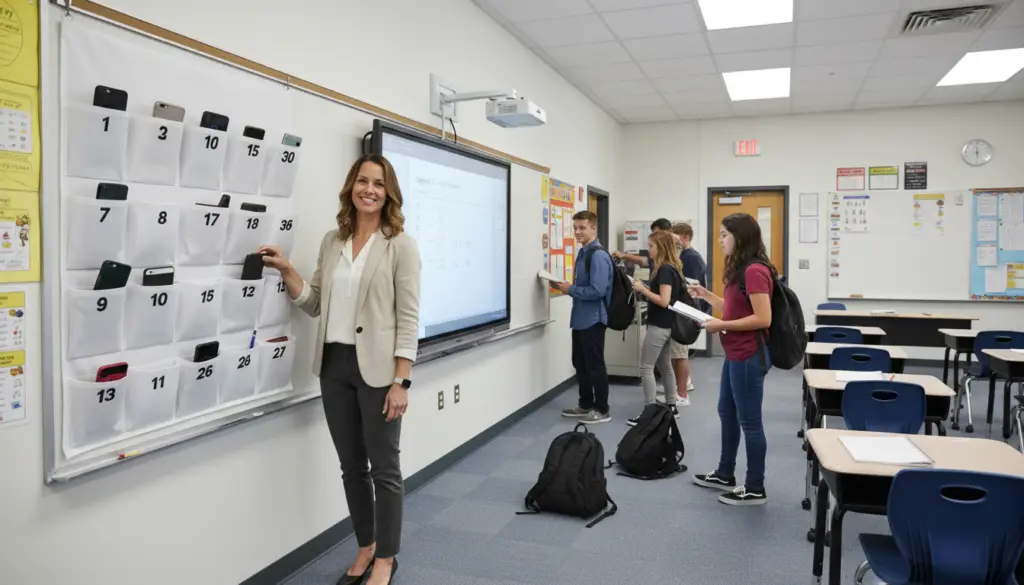
Teachers: phone parking systems (numbered wall pockets at the door) work well, and cooperation improves when you explain the learning science instead of just imposing rules.
Students: start with honest self-assessment; most people underestimate their real usage. Keep the phone in your backpack instead of your pocket, sit near the front, wear a basic watch, and form study groups that agree to phone-free sessions so peer pressure works in your favor.
Parents: keep phones out of study spaces with a central family charging station, align with the school’s device policies, and monitor without micromanaging. Regular conversations about digital habits beat imposed rules.
Your Four-Week Focus Recovery Plan

- Week 1 – Observe: turn on screen time tracking and change nothing. Note when you grab the phone, what triggers it, and which apps eat the most time.
- Week 2 – Three changes: pick three achievable moves, like silencing social notifications, phone in another room during homework, and no screens the hour before bed. Expect discomfort; that’s your brain adjusting, not failure.
- Week 3 – Environment: add a phone-free study space, a list of replacement activities, and device-free family meals.
- Week 4 – Review and adjust: check your screen time data, celebrate wins, drop what isn’t working, and tighten rules for exam periods.
| Challenge | Why It Happens | Practical Solution |
| Strong urges to check the phone | Brain seeking dopamine reward | Three deep breaths, then an alternative activity for five minutes |
| Friends expect instant responses | Social pressure and FOMO | Communicate your study hours; check messages at set times |
| Boredom without a phone | Unused to quiet mental time | Keep a list of quick activities; practice sitting with boredom briefly |
| Need a device for homework | Research or online assignments | Use a computer with social apps blocked during work time |
Track outcomes beyond screen time: grades, sleep quality, stress, family conversations. Those are the measures that matter. Expect setbacks during stressful stretches and return to the plan without self-criticism.
Questions about attention and focus habits? Speak with Dr. Meenu Vaid: (669) 270-2142
Frequently Asked Questions
How is redirecting attention different from just distracting yourself?
Distraction pushes an urge away for a moment; redirection notices where your attention went and guides it toward something you actually chose. Redirection builds a lasting skill, while distraction usually leaves the underlying habit untouched. We explain this distinction in depth in our guide to redirection vs. distraction in pain therapy, where the same principle applies.
What are effective ways to redirect a child’s attention away from screens?
Offer a concrete alternative rather than just saying “put the phone down”: a physical activity, a shared task, or a brief mindful break. Grounding techniques and movement work especially well for younger children. Consistency matters more than any single technique.
Do these techniques work for adults, or mainly for students?
They work at every age. Adults respond well to environmental changes (phone in another room), scheduled checking times, and brief mental breaks between focus blocks. The brain’s attention systems are trainable throughout life.
What should I do when redirection doesn’t seem to work?
First check the environment: if the phone is within reach, willpower loses eventually. Then make the plan smaller and more specific. If focus problems persist despite consistent effort, or they come with significant stress, low mood, or sleep problems, talk with a clinician about what else might be going on.
How can parents help children build healthy phone habits?
Model the habits yourself, give children real choices within clear boundaries, and keep shared device-free times (like dinner) that apply to the whole family. Kids copy what they see far more than what they’re told.
Start Reclaiming Your Attention Today
This isn’t about hating technology. It’s about using devices in ways that serve your goals instead of someone else’s engagement metrics. Start with one small step tonight: silence notifications, move the phone out of your study space, or make dinner device-free.
You don’t have to figure it out alone. Dr. Vaid helps patients rebuild focus as part of wellness coaching at Savera. And if phone habits feel closer to compulsion than choice, our social media addiction page explains when professional support makes sense.
Your attention is your most valuable resource. Where it goes, your life follows.
Partner With a Physician on Focus and Habits
Dr. Vaid combines board-certified medical knowledge with practical wellness coaching to help students, families, and professionals build habits that last.
Medically reviewed by Dr. Meenu Vaid, MD, board-certified in Internal Medicine, Infectious Disease, and Addiction Medicine. Last reviewed on July 29, 2026.