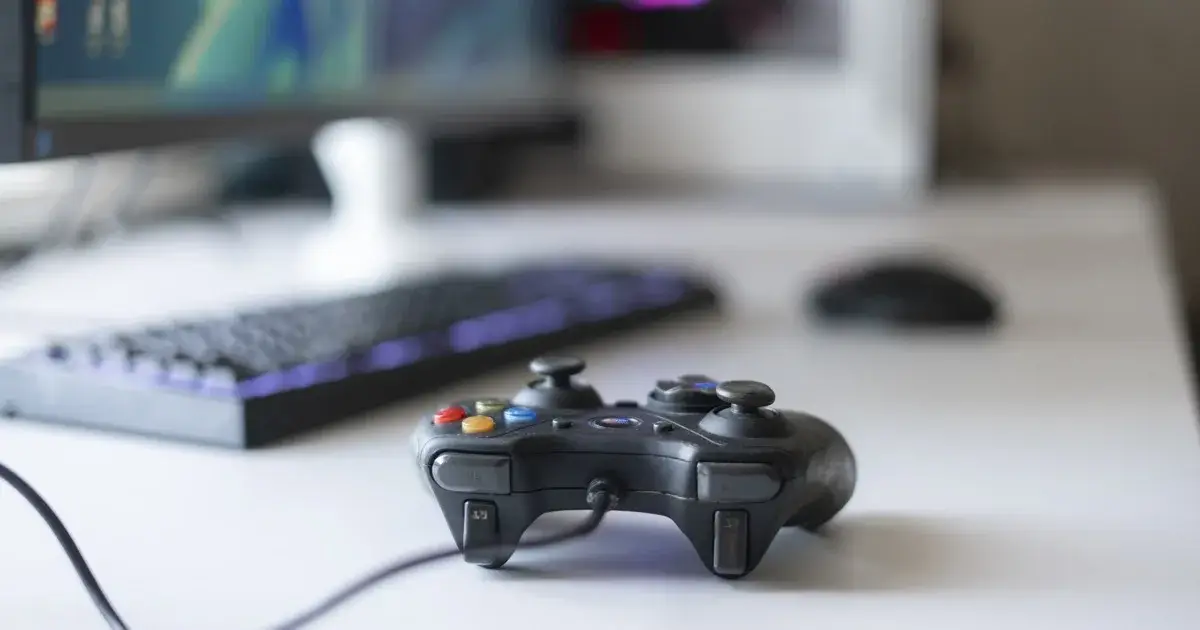
Gaming becomes a disorder when three things happen together: a person loses control over when and how long they play, gaming takes priority over almost everything else, and the playing continues even as it damages sleep, school, work, or relationships. The World Health Organization also requires real impairment lasting around 12 months.
Notice what is missing from that. No hour count. No list of games. No age cutoff. The test is whether life is still working.
What is gaming disorder, and how is it different from playing a lot?
Gaming disorder is a recognized diagnosis in the World Health Organization’s International Classification of Diseases, 11th Revision (ICD-11), code 6C51. WHO defines it as a pattern of behavior with three features, all of which have to be present, plus a duration and an impairment requirement.
Playing a lot is not one of the three features. A person can put serious hours into a game, hold down a job, sleep normally, and stop when something else needs attention. That is a hobby. The picture changes when the hours stop being a choice.
| ICD-11 criterion | What WHO says | What it looks like day to day |
|---|---|---|
| Impaired control | “impaired control over gaming” (onset, frequency, intensity, duration, termination, context) | They mean to play for one hour and it is four. They have promised themselves, more than once, that tonight is different. |
| Increasing priority | “increasing priority given to gaming over other activities to the extent that gaming takes precedence over other interests and daily activities” | The team practice gets dropped. Dinner is eaten at the desk. Plans with friends get canceled and then stop being offered. |
| Continuation despite harm | “continuation or escalation of gaming despite the occurrence of negative consequences” | The grades slid, the partner is upset, the sleep is wrecked, and the play time still goes up rather than down. |
| Plus, required | “significant impairment to a person’s functioning in personal, family, social, educational, occupational or other important areas” and “would normally have been evident for at least 12 months” | This is the gate. Without meaningful impairment, and without a pattern that has persisted, it is not gaming disorder. |
Source: World Health Organization, ICD-11 for Mortality and Morbidity Statistics, gaming disorder (6C51), and the WHO gaming disorder FAQ. ICD-11 was released in June 2018 and entered into force on 1 January 2022.
WHO adds a line worth reading twice: gaming disorder “affects only a small proportion of people who engage in digital or video gaming activities.” The diagnosis exists. It is also rare.
How common is gaming disorder, really?
The published estimates disagree with each other badly, and the disagreement is more useful than any single number. The most careful pooled figure is roughly 3% of gamers worldwide. Against a strict clinical threshold in the general population it drops to 0.3% to 1%. In children and teenagers, pooled estimates run to about 10%. Those are not contradictions. They are different questions.
| Study | Published | Survey years | Population | Estimate | Why it differs |
|---|---|---|---|---|---|
| Przybylski, Weinstein & Murayama (PMID 27809571) | 2017 | approx. 2016 | 18,932 adults and adolescents, four pre-registered surveys | 0.3% to 1.0% of the general population might qualify | Strict clinical threshold, general population rather than gamers. More than two in three players reported no symptoms at all. |
| Stevens, Dorstyn, Delfabbro & King (PMID 33028074) | 2021 | studies run 2009 to 2019 | 226,247 participants, 53 studies, 17 countries | 3.05% (95% CI 2.38 to 3.91); 1.96% under stringent sampling | The methodological benchmark. Also found a male-to-female ratio of about 2.5 to 1. |
| Gisbert-Pérez et al., Addictive Behaviors | 2026 | studies published 2015 to 2025 | 149,601 participants aged 18 to 35, 93 studies | 6.1% (95% CI 5.03 to 7.40) | Young adults only. Rose to 8.1% in gamer-only samples versus 5.47% in mixed samples. |
| Barboza et al. (PMID 42071239) | 2026 | searches to September 2025 | 251,037 participants aged 6 to 18, 19 studies | 10% (95% CI 6 to 15) | Children and adolescents only, and enormously heterogeneous (I² = 99.7%), ranging from about 1% in some European samples to over 25% in some Middle Eastern and Latin American ones. |
| Gentile, Psychological Science | 2009 | 2007 | 1,178 US youth aged 8 to 18 | about 8% of video game players | Often quoted as “8% of kids.” It was 8% of players, from 2007 data, before smartphones changed everything. |
So why the spread? Stevens and colleagues answered that in 2021: the choice of screening questionnaire accounted for 77% of the variance between studies. Not the country. Not the year. The instrument. Studies using a shorter scale, a lower cutoff, adolescent samples, or gaming-community recruitment found more cases. Barboza’s team said the same of their own 10% figure, warning it should be read as an average across very different contexts rather than a global rate.
So be skeptical of any page, including this one, that hands you a single confident percentage. A prevalence figure also tells you nothing about the specific person you are worried about. Only the pattern can.
For scale: the Entertainment Software Association, a trade body rather than a peer-reviewed source, reports in its 2026 Essential Facts that 212.3 million Americans play video games regularly. Most of them are fine.
What does video game addiction actually look like?
Here is where the ICD-11 language becomes something you can observe, sorted into three bands.
| Worth noticing | Worth a conversation | Worth a medical visit |
|---|---|---|
| Late nights on weekends and school holidays | Grades or work output slipping over a term, not just a week | Sleep has collapsed. They are up most of the night and wrecked most of the day. |
| Irritable when a session is interrupted mid-match | A sport, instrument, or club quietly dropped | Meals are being skipped or eaten entirely at the desk |
| Talking about the game constantly | Playtime being hidden, minimized, or lied about | Withdrawal from every friendship that is not inside the game |
| Preferring gaming to other free-time options | Friendships outside the game thinning out | Repeated, genuine attempts to cut back that have failed over months |
| Spending money on the game within a budget | Money going in faster than they intended | Gaming continuing even after a clear, personally important loss |
This is a set of observations, not a diagnostic instrument. No row here diagnoses anything. If you want something more structured, the free behavioral addiction screener on this site is built for that, and it is still a starting point rather than an answer.
Why hours played is the wrong measure
This is the question everyone reaches for, and the honest answer is uncomfortable: no hour threshold separates a healthy gamer from a person with gaming disorder.
The best evidence comes from Katz and colleagues in the Journal of Behavioral Addictions, published in 2024, who analyzed 14,740 highly engaged gamers to ask exactly this. Groups flagged as at risk of gaming disorder averaged around 42 hours a week. But 41.9% of the sample reported no psychological distress at all while averaging 26 hours a week. The authors concluded that even prolonged time spent gaming can be unproblematic for many gamers.
Read that again if you have ever seen a chart saying four hours a day means intervention is needed. Two people can log identical hours, and one has a disorder while the other has a hobby.
That does not make time irrelevant. It makes time a symptom rather than a test. If the hours climb while sleep, food, school, and friendships fall away, the direction of travel is the signal. We go deeper into thresholds on how many hours of gaming is too much.
What does problem gaming do to sleep?
Sleep is the most consistently measured harm in the research, and the easiest thing to actually observe.
A 2021 systematic review and meta-analysis by Kristensen and colleagues (PMID 34163386) pooled 34 studies covering 51,901 people. Problematic gaming was associated with shorter sleep duration (Hedges’ g = -0.238, 95% CI -0.364 to -0.112), poorer sleep quality (odds ratio 2.02, 95% CI 1.47 to 2.78), daytime sleepiness (OR 1.57, 95% CI 1.00 to 2.46), and sleep problems overall (OR 2.60, 95% CI 1.94 to 3.47). The effect on sleep duration was larger in adolescents than in adults. That sleepiness interval brushes 1.00, making it the weakest of the four.
If you are deciding whether to worry, sleep is the signal to track first. It is concrete, you can see it without an argument, and it slips before the grades do.
Who is most at risk?
Three patterns hold up across the literature.
Men and boys are diagnosed more often, at a male-to-female ratio of roughly 2.5 to 1 in the 2021 meta-analysis. That also means a substantial minority of people with gaming disorder are girls and women, who are more likely to be missed.
Younger people show higher rates: 10% pooled in ages 6 to 18, against 6.1% in ages 18 to 35 and under 1% at a strict threshold in the general adult population. Adolescence is the window.
Existing mental health difficulties travel alongside problem gaming. That is important context rather than something to diagnose from a blog post, and Dr. Vaid is not a psychiatrist. If depression, anxiety, or attention difficulties are part of the picture, involve a primary care physician or a mental health clinician.
One thing that is not a risk factor: the specific game. Odds ratios attached to game genres could not be traced to any study, so they are not on this page.
Is video game addiction even a real diagnosis?
Partly, and the “partly” is worth understanding.
The World Health Organization says yes. Gaming disorder is a formal diagnosis in ICD-11, in force since January 2022. The American Psychiatric Association has not gone that far: in the DSM-5-TR, Internet Gaming Disorder sits in Section III, “Conditions for Further Study.” That is a research category, not a billable diagnosis. Any page claiming the APA classifies gaming disorder as a mental health condition is overstating the position.
A substantial group of researchers objected to the ICD-11 proposal outright. In a 2017 open debate paper in the Journal of Behavioral Addictions, 28 named academics argued the diagnosis risked pathologizing ordinary play and rested on a research base that was not yet strong enough. WHO proceeded anyway, because clinicians were seeing patients who needed a code and a care pathway.
Both things are true. Gaming disorder is real and it affects a small minority of players. Anyone selling you certainty in either direction is selling you something, which is also why a dopamine detox is not the fix it sounds like.
What actually helps, and what does Savera provide?
Controlled trials show that treatment works. A 2025 systematic review and meta-analysis by Harpas and colleagues (PMID 41187384) pooled 21 controlled trials run between 2007 and 2025, covering 1,360 participants. Symptoms improved with a large effect (g = 1.38, p < .001), gaming time fell (g = 0.90, p = .002), and depression and anxiety scores improved too (g = 0.65 and g = 0.66). Gains held at 90-day follow-up, and adolescents responded better than adults. The authors flagged real limitations: inconsistent diagnostic approaches, short follow-up, and high heterogeneity.
Most of those trials tested cognitive behavioral therapy. That is what has been studied, so that is what the evidence describes.
Savera does not provide cognitive behavioral therapy. Dr. Vaid is not a psychiatrist and does not offer counseling, group therapy, family therapy, inpatient care, or residential care. Saying so plainly is more useful than a vague promise.
What she does do: evaluate the whole picture clinically, use motivational interviewing, address co-occurring medical concerns within her scope, prescribe where indicated, order labs through an external partner laboratory, and connect you with a therapist who does this work. Referral is part of the care, not a consolation prize.
When should you talk to a physician about gaming?
You do not need to meet a diagnostic threshold to book. You need a reason to be concerned, and these are good ones. Sleep has changed and stayed changed for more than a few weeks. Weight, appetite, or hygiene has slipped. Someone has tried to cut back, meant it, and could not. Something that used to matter, a sport, a friendship, a job, has been let go.
An evaluation is not a verdict. It is an unhurried appointment where the whole picture gets looked at, including the medical parts missed when everyone assumes the problem is willpower. You can book a gaming disorder evaluation with Dr. Vaid directly.
If the person you are worried about is your child, start with what parents can do when a teenager games too much. If you have already decided to cut back, read ways to cut back when gaming has taken over.
If someone is talking about suicide, self-harm, or is in immediate danger, call or text 988 (Suicide and Crisis Lifeline) or call 911. Do not wait for an appointment.
Frequently asked questions
Is video game addiction the same as drug addiction?
No. Gaming disorder is a behavioral condition classified separately in ICD-11. It is not a substance use disorder, and describing it as one is inaccurate. The two share features such as impaired control and continuation despite harm, but they are distinct diagnoses.
How long does the pattern have to last before it counts?
WHO states the pattern “would normally have been evident for at least 12 months,” while allowing a shorter period if all requirements are met and symptoms are severe. Twelve months is the general expectation, not a waiting period before anyone gets help.
My teenager plays 30 hours a week. Is that a disorder?
Not on its own. In the 2024 Katz analysis, 41.9% of gamers averaging 26 hours a week reported no psychological distress. What matters is whether they can stop, what the gaming has displaced, and whether it continues despite consequences they care about.
Does gaming cause depression or anxiety?
The research shows associations, not established causation. Problem gaming, poor sleep, and low mood commonly occur together, and untangling the direction takes a clinician who can see the whole person. Dr. Vaid does not diagnose or treat psychiatric conditions and would refer you to someone who does.
Where does the “8% of kids are addicted” figure come from?
Usually from Gentile’s 2009 study in Psychological Science, which found about 8% among video game players aged 8 to 18, using 2007 Harris poll data. It is requoted as 8% of all children, without the year and without the denominator. Both details change what the number means.
Medically reviewed by Dr. Meenu Vaid, MD, triple board-certified in Internal Medicine, Infectious Disease, and Addiction Medicine.
Last clinically reviewed on August 5, 2026.
This article is for general educational purposes only. It is not medical advice, and reading it does not create a doctor-patient relationship. Always seek the advice of your physician or another qualified health provider with any questions you may have about a medical condition. See our full medical disclaimer.
In a medical emergency, call 911. If you or someone you know is in crisis, call or text 988 to reach the Suicide and Crisis Lifeline.
Savera is a direct-pay practice in Morgan Hill, California. Insurance is not billed. HSA and FSA are accepted.